
THE RISE OF CITIZEN JOURNALIM: A THREAT OR A REVOLUTION?
Home / Creative Writing / THE RISE OF CITIZEN JOURNALIM: A THREAT OR A REVOLUTION?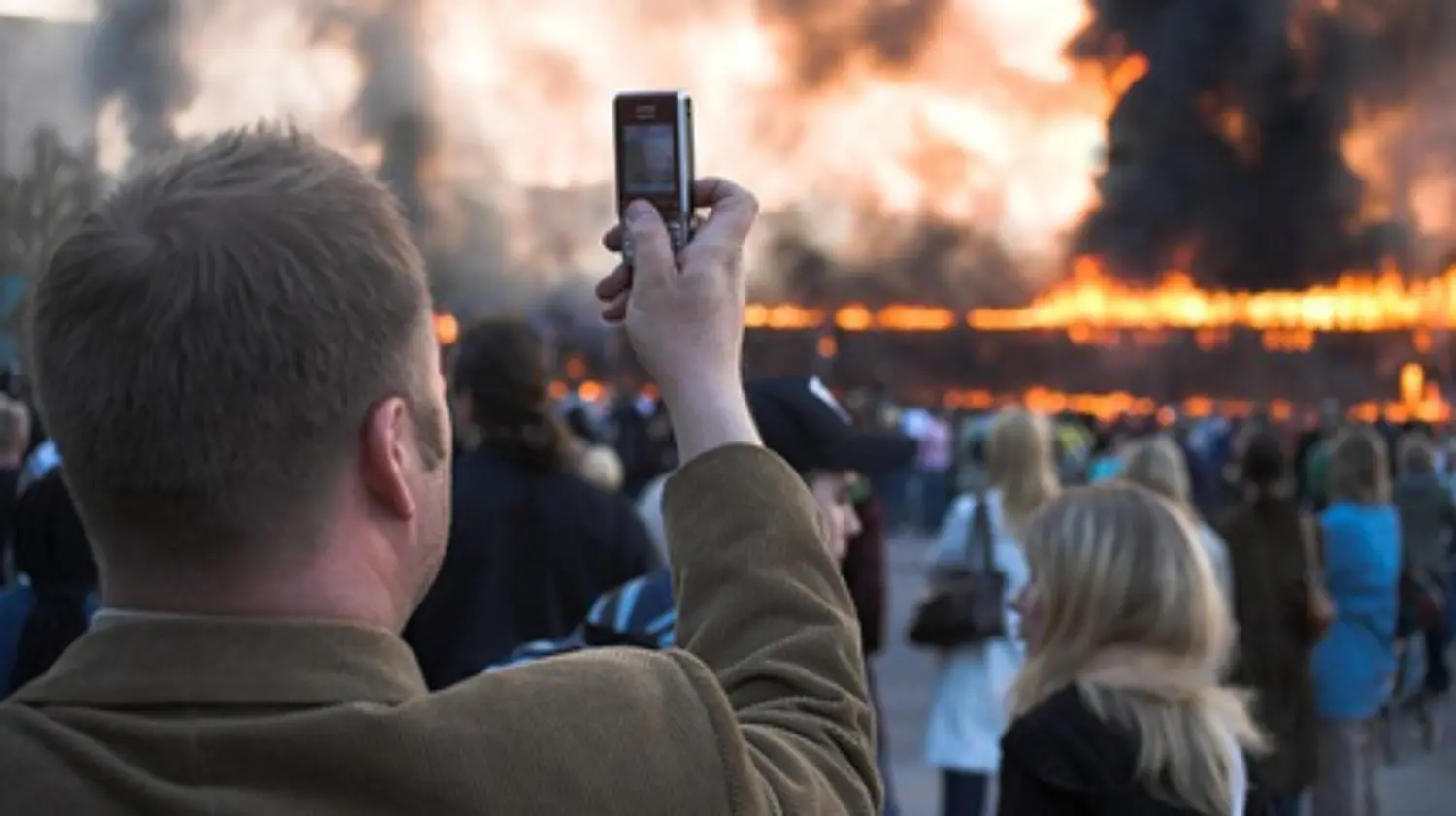

Anisha Kochar
PGDM Core
Today, one smartphone in the hands of a regular person can surpass professional reporters. It can disseminate stories of injustice with millions in just minutes.
The changing of the news environment in the last two decades has occurred faster than the previous one hundred years. A reporter used to have a notebook and microphone but now an onlooker with a smartphone can connect with millions in a matter of minutes. This is commonly referred to as citizen journalism that brings both advantages and disadvantages. Some may suggest this is a threat to professionalism, while others may welcome this as a revolutionary step that opens the door for news access to everyone.
There is no doubt that the immediacy and accessibility of the reporting aspect of citizen journalism is the most compelling. If there is an event such as a protest or a disaster, it is usually the people/participants at the event that will capture the first images. They share video, email images, and offer short reports well before the professional reporters have a chance to arrive on the scene. The very nature of the raw reports brings a raw quality that compels the audience. In addition, citizen journalism provides an outlet for constituencies that might not have had a voice in the mainstream media. The reports of stories ranging from local government corruption, neglect, and more subtle forms of protest were individual episodic transcriptions of ordinary people.
India serves as a defining case study of citizen journalism. In 2011 there were reported to be 572 rapes, a number that jumped to over 800 in 2012, giving the moniker of ‘rape capital’ to India. The Nirbhaya gang-rape case on December 16, 2012 sparked a national movement when citizens began posting photos and videos of protests on social media simply to get it to be reported on mainstream media, all by user generated content. This public mobilization spread shock throughout the nation, and legally brought attention to barriers to the legal enforcement of justice and moved society to a stance of zero tolerance on gender-based violence. The United Nations declared rapes in India, a “national crisis”. Yet, one in three rapes reported, are actually on record, and only some lead to a conviction, mostly due to social stigma. Citizen journalism creates a sense of urgency and visibility to a crisis, that goes unnoticed.
However, there are underlying challenges. Fact-checking, ethics training, laws around defamation and the ability to stand behind the reporting, all take place for the professional journalist. The same kind of professional oversight does not exist for citizen journalists, who can simply assert that they heard (or their own biases claim they heard) a partial story, or that they did not hear the whole story, or some of their story is not reported accurately. There is a classic case of the post in 2008 on a message board that said Steve Jobs had a heart attack, and that led to Apple’s stock price plunging even before that post was taken down and corrected. These are obvious case studies of misinformation moving quickly with no basis of professional journalism rationale.
Despite this fact, citizen journalism has played a big role in public conversations. It is not possible for professionals to be covering through, or reporting on every instance, only citizens can document their own lived experience to fill in the gaps. Bystander videos of protests in Tehran, the Boston Marathon bombing, or a short clip of a local parade or family member’s wedding celebration on social media, all of these events raise our awareness of what is happening locally or globally. When “non-journalists” document events as they unfold, the way they are turning those moments into news event continues the life of that moment as “news.” As traditional media incorporates more curated content produced by citizens, it is becoming a space where collaborative concentration generates the most powerful results.
The true value of citizen journalism is moving the balance of power. Audience dissemination of information no longer flows from newsrooms, as it now flows in two directions, allowing citizens to question, challenge, and attempt to shape the news agenda. Though not perfect in its execution, citizen journalism broadens the scope of journalism, provides greater inclusivity, and enhances democratic accountability through the power of storytelling, which is now shared by the many and not just the few.
See the sources : Click Here
Related Blogs

NVIDIA: THE CHIP DOMINANCE
S Hafsah Sayeedah PGDM Core Guided by curiosity and grounded in learning, she…

Existentialism: A Guide to Create Your Own Living
Jaskaran Gill PGDM Core Driven by curiosity and an urge to write constantly, He looks…