

Sri Lasya Priya Ammu
PGDM IT
“Internal Weaknesses invite external intervention; when governments collapse, sovereignty becomes negotiable.”
With estimates suggesting 22.7% of the Venezuelan population living under the international poverty line threshold (3$/day) and Venezuela’s ruling government being the Chavista elite, which includes military, politicians who endorse corruption, this phrase only serves to be accurate.
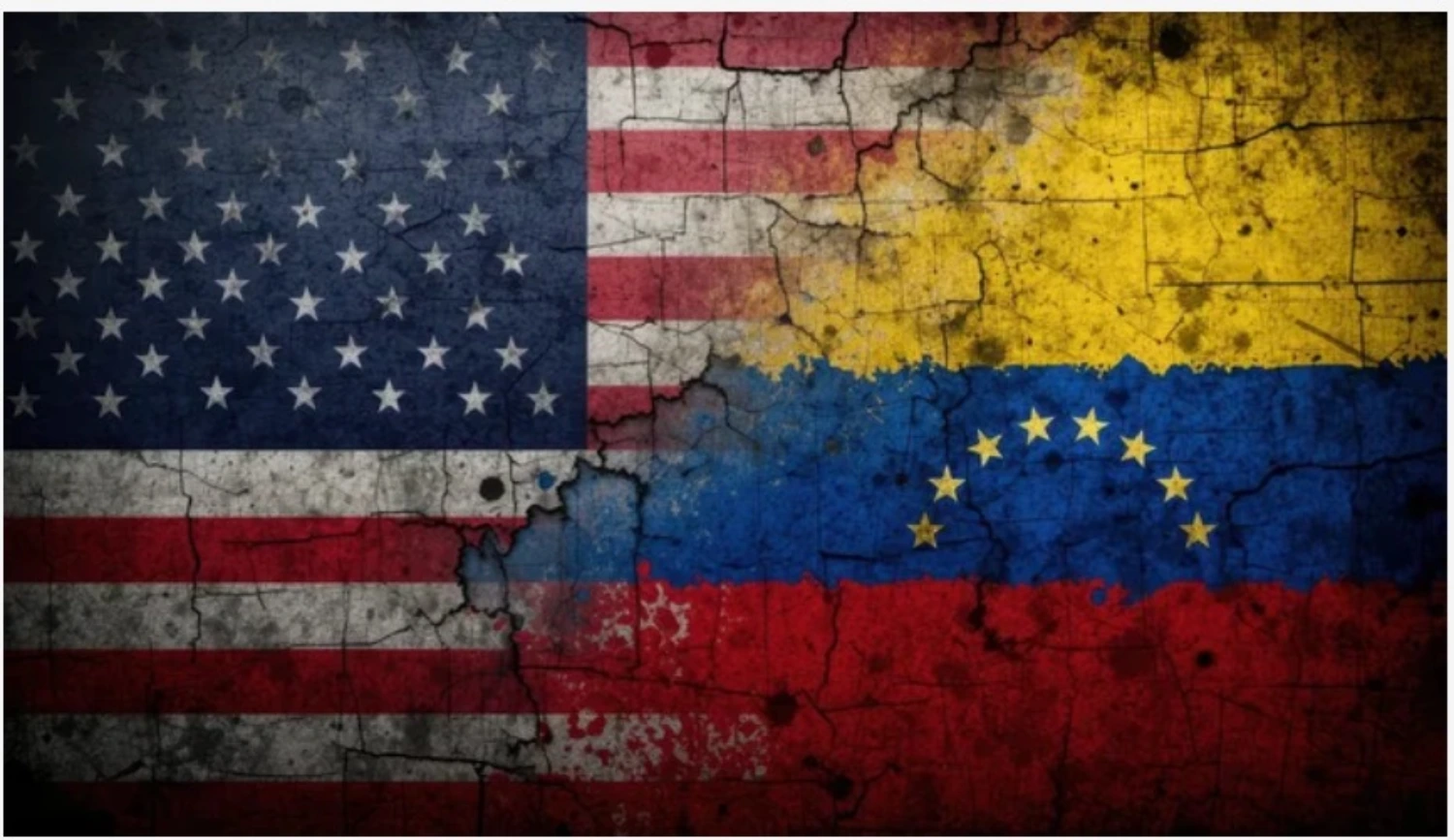
Operation Absolute Resolve: Venezuela has been weak for many decades. Does this give power to foreign countries to intervene, as in this case, where the US captured President Nicolás and First Lady Cilia Flores overnight while carrying out operations across northern Venezuela, including the capital, Caracas? This can be understood through the 1823 Monroe Doctrine. Formulated by James Monroe, the 5th president of the United States, it states that the U.S. wouldn’t meddle in European affairs if Europe stayed out of the Americas, creating separate spheres of influence and becoming a cornerstone of U.S. policy.
While this doctrine has had corollaries over the years, the Trump corollary, as declared by President Trump through his speeches, extends to U.S. primacy in the Western Hemisphere to counter drug trafficking, migration, and the influence of China and Russia.
Donald Trump carried out Operation Absolute Resolve, which is a move with the resolve to end the drug ecosystem in Venezuela. On Jan 3rd, at 2 a.m., the arrest of Venezuelan President Nicolás Maduro, according to President Donald Trump, is allegedly a limited war against drugs. The United States imposed full sanctions on PDVSA( Venezuela’s state-owned oil and natural gas company) in January 2019 to block Nicolás Maduro’s oil revenue and trigger financial collapse due to his undemocratic practices and link to drug trafficking. Although China’s continued purchases of Venezuelan crude kept cash flowing to the Maduro regime.
According to economists, Venezuela, possessing 17.4% of the world’s crude oil reserves, exports less than 1% of it. This is claimed to be due to mismanagement, underinvestments, and international sanctions which prevented major companies from investing.
Of the 1% of exports, based on available trade data, 80% flow to China, while the remaining 20% flow to Cuba and the USA. Oil in Venezuela is characterized as heavy and requiring lots of processing for commercial use. Due to a lack of infrastructure, it currently exports only 1M b/d, down from 2M b/d two years ago. It is estimated to reach 1.4 million barrels per day (b/d), provided sanctions are lifted, starting from 500,000 b/d, increasing by 300,000 b/d every year for the next two years.
International Oil standards are benchmarked by Brent crude price and WTI(West Texas Intermediate), which are at $62(low) and $59, indicating surplus, and this price is expected to come down in 2026, as per commodity traders.
Against this backdrop, U.S. interest in Venezuela’s oil appears driven less by immediate market needs and more by long-term strategy. Oil, when extracted, comes in the form of either light or heavy. The US previously built infrastructure to process heavy oil, whereas it now has a huge amount of light oil. Changing infrastructure involves huge investments. Hence, it has strategic use for Venezuelan infrastructure for processing its heavy oil.
Along with Cuba, China, and the US, India also imports 0.6% of its oil from Venezuela; the present situation doesn’t imply a significant effect on India.
Venezuela, as a nation, has a Politicized government, economic and political migration of skilled engineers, and it also has a significant debt to the USA. According to the Financial Times, current external debts amount to $150 billion and continue to rise. There are also $60 billion in bonds, with $20 billion allocated to companies like ExxonMobil and ConocoPhillips.
This capture’s success will be measured by further aid in propelling Venezuela’s prosperity and freeing from the military regime.
Sources:
https://www.euromonitor.com/article/venezuela-regime-change.
https://www.marketpulse.com/markets/why-venezuelas-political-transition-has-left-oil-markets-largely-unmoved/.
https://www.morganstanley.com/insights/articles/market-implications-us-intervention-venezuela.
https://www.swastika.co.in/blog/venezuela-crisis-impact-on-indian-finance-and-stock-market-explained.
https://www.pmfias.com/us-military-operation-in-venezuela/.
https://www.ft.com/content/59491879-2d53-49f9-9823-7318f361d64c.
Related Blogs

Finance Courses in Demand in 2026 — What Employers Are Hiring For
INTRODUCTION According to recent publications from the World Economic Forum, the global financial sector is…

Does Business Always Mean Risk-Taking?
Frankly speaking, the word business today covers almost every part of working life. From the…

Can a PGDM Still Guarantee a Job in the AI Era?
Introduction The dedication to advanced studying and acquiring a higher educational qualification is something that…

Does Rebranding Work?
Kashish Sehgal A quiet observer, she is drawn to the stories behind people….

HOW TO BECOME A FINANCIAL MANAGER?
Introduction The terms “finance” and “financial markets” are quite popular, even in public discourse, despite…

Analysing frugal as well as circular economies and exploring their relevance today
Sarbanga Mishra Sarbanga Mishra, a Christ University Bangalore graduate, has served as a journalist…