
No Country for Young Men: A Treatise on Bihar’s Becoming
Home / Informative / No Country for Young Men: A Treatise on Bihar’s Becoming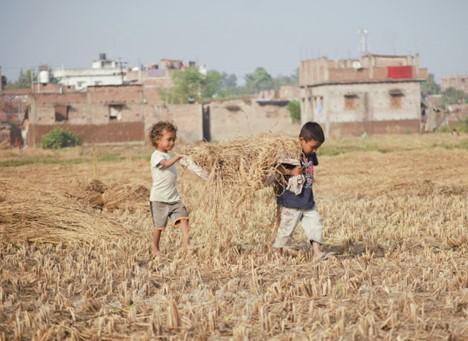

Janvi
PGDM Core
India’s demographic dividend has a geographic fault line, and Bihar sits squarely on the wrong side of it.
Bihar is the youngest state of the country accounting for about 8% of the total national population and has a working-age population that continues to expand. Bihar also is the state that has been getting one of the highest grants-in-aid from the central government and is rich in resources, sitting in the rich Indo-Gangetic plains and benefits from the alluvial soil of the river system.
Patna was declared to be the second-best city to start a business in by the World Bank in the year 2009 due to its low cost of entry, where entrepreneurs spent less than 40% of income per capita to start a business. This made Patna a more cost-effective option when compared to larger hubs.
When we look at these facts, the demographic profile and the position of the state paints a positive picture, a state that could be sustaining increased employment, per-capita GDP and a general upward growth trend, but the reality is much too grim.
When we think of Bihar, the first image that comes to most people’s minds is probably a scene from “Gangs of Wasseypur”, guns blazing, cuss words flying, Manoj Bajpayee in a beige shawl with a handgun, stacks of hay and primarily an agrarian backdrop which may sound an oversell to some but is a reality for 76% of the state’s population.
Bihar’s growing youth population is coming into an economy that is unable to absorb them. The state contributes a measly ~2% to India’s GDP and has been on a negative trend in the last 50 years and relies mostly on grants it receives from the state. So, where is the state failing to provide for its youth?
This piece discusses the institutional failures and the nexus of these failures on which the state sits which has denied the youth it houses, economic mobility.
You are disadvantaged right from birth if you were born in Bihar as the public health system is under-functioning, there are about 0.55 hospital beds per1000 people which is far below the recommended standards of 3 beds per 1000, care is inaccessible, for families it means waiting, traveling through villages or foregoing treatment altogether. This comes at a cost; an infant mortality rate which is 47 per 1000 live births.
An important thing to note is that the state has not utilized the entirety of its healthcare budget, F.Y. (2024-25) lowering the efficacy of allocations meant to improve services.
Growing older in the state is also an issue, with food insecurity being a major concern in the state, despite the economy being primarily an agrarian one, 43% of children under five are stunted and 23% are suffering from wasting (low weight for height), these are indicators of chronic and acute under-nutrition and if close to half of the young population is suffering from stunting, it will lead to reduced adult height, lower IQ, poor school performance, and weakened immunity, there is little to expect from the youth, and for no fault of their own. Historical poverty further compounds the problem with 33.76% of the state’s population living below the poverty line.
The string of issues doesn’t end there, as a child grows up and requires quality education, necessary for increasing a state’s human capital and employability at an individualistic level, the child is met with the lack of quality infrastructure in the schools, unavailability of teaching staff, and lack of basic resources.
At a more macroscopic level, the enrolment at the primary levels is high; dropout levels rise sharply at secondary levels, with only 17% of the state’s population between the ages of 18-23 being enrolled in colleges and universities, indicating weak progression through the system.
And when a person does grow up and wants a better quality of life, they know that they won’t get that in Bihar and so, they move to better cities and states. In fact, recent estimates suggest that Bihar has one of the highest rates of out-migration in the country with migration happening in the youth-driven and male-skewed sector, with a large share employed in informal, low-wage sectors such as manufacturing and construction.
The title of this blog is not a statement that signals inevitability but institutional failure, where the youth of the state are born into a system that fails them every step of the way perpetuating a vicious cycle of weak education systems, absence of industrial and formal employment pushing young human capital outward. Migration drains the mobile and skilled population, weakening the very constructs required for long-term growth. Bihar’s becoming, therefore, is not stalled by a lack of people or potential but a political economy that causes its youth to leave rather than build.
Related Blogs
The Overlooked Link Between Climate Change and Gender Inequality
Shreeparna Kar An avid reader who finds reading not just as a source…

Individuation: The Concept of Self
Jaskaran Gill PGDM Core Driven by curiosity and an urge to write constantly, He…

Lessons from the Flames: Wildfires and Climate Change
Devanshu A B.Com Honours graduate, this boy brings a calm, composed, and optimistic approach…

Living with the New Normal: Problems and advances in the Education sector
Prachi Mehta An outgoing introvert who believes in the art of articulation, voracious to…

The Significance of Elections in India and Their Impact on the Stock Market
Ankit Aggarwal Ankit Aggarwal is a student at IMT Hyderabad with a keen interest…

Sneakers: The modern-day Gold
Priyanshu Garg He brings many different perspectives to his writing through research and…