Fast, Cheap and Ethical? The Dilemma of Fast Fashion
Home / Business / Fast, Cheap and Ethical? The Dilemma of Fast Fashion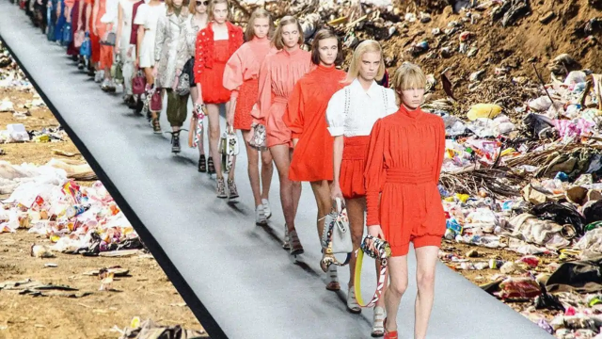

Vidhatri Navuluri
PGDM Finance
The modern fashion industry has transformed considerably over the past two decades, thanks to the advent of fast fashion. Social media has led trends to appear and disappear at a faster pace than ever, seemingly with no rhyme or rhythm. Businesses are therefore constantly striving to be the first in the market to identify a new trend and bring it to stores as quickly and cheaply as possible. This shows how the power to influence fashion has shifted from the hands of coveted designers to being at the mercy of micro-trends and influencer culture.
High-speed, high-volume, and low-cost operations are crucial to survive in such a fast-paced industry. International brands like H&M, Zara, and Shein have business models that revolve around these very same principles. In India as well, companies like Zudio have made trendy clothing easily accessible to a larger, price-sensitive demographic. All of these brands essentially aim to create a sense of “FOMO” amongst their consumers by continuously releasing new designs, which inevitably leads to more frequent purchases. With India’s apparel market projected to expand from $95.7 billion in 2025 to $146.3 billion by 2029, the industry presents significant growth opportunities.
Despite this massive upscale, there unfortunately remain several ethical implications. A 2023 report by The Guardian investigates the growing problem of clothes dumpsites in Ghana. The country receives millions of second-hand garments each week, but a substantial proportion of them are deemed unfit for resale or reuse. According to the Or Foundation, more or less 40% of the clothing passing through Accra’s Kantamanto market ends up being dumped. These garments, which are usually composed of synthetic non-biodegradable materials like polyester, are proven to be extremely disruptive to the environment. Eventually, these discarded clothes pile up in the form of dumpsites and end up polluting waterways and beaches, wrecking the livelihoods of local fishermen.
Furthermore, washing polyester clothing detrimentally affects aquatic environments. The European Environment Agency estimates that between 200,000 and 500,000 tonnes of textile-derived microplastics enter the global marine environment annually. The production process as well, is a huge contributor to greenhouse gas emissions. However, polyester is still used extensively because of how inexpensive and durable it is. This shows how the environmental consequences of fast fashion begin long before an item is purchased and continue well after it is discarded.
Equally troubling are the labour practices that are involved in the manufacturing of fast-fashion apparel. To maintain such staggeringly low prices and strict lead times, the core production processes are frequently outsourced to countries with weak labour protections, often the southern and eastern regions of Asia. Workers in manufacturing hubs across China, Bangladesh, Vietnam, and India often have to face deplorable working environments and wages well below the minimum required. A 2025 BBC investigation takes us behind the scenes of a Chinese sweatshop employed by Shein. According to the report, the workers are usually forced to have 75-hour work weeks, while they are paid only about a third of what is deemed a “living wage”. This shows how the pressure of maintaining low prices and generating revenue takes priority over human and worker welfare for some of these firms.
Thus in these dire circumstances, it should come to no surprise that the slow-fashion movement has been gaining more and more attention. As described by British Vogue, slow fashion is the process by which clothes are designed and created while being mindful of materials, consumer demand, and climate impact. Although consumers now seem to have more money to spend on fashion items, they also have increased access to ideas and influences that can shape who they choose to stay loyal to. Insights from Deloitte’s 2026 India’s Fashion Report indicate that consumer behaviour is slowly but surely pivoting towards more premium consumption rather than frequent purchases. This approach intends to promote ethical and conscious fashion by stepping away from the never-ending cycle of micro-trends.
There is no doubt that fast fashion has transformed how clothing businesses operate, but whether it is here to stay is a question still left unanswered. Balancing sustainable profits and a sustainable future calls for looking beyond the price tag.
Image Source: Click Here
Related Blogs

Steam: Market Leader or Market Lock-In?
Govind S Nair PGDM Core Driven by a love for learning new things, I enjoy…
From Familiar to Fresh- A Story of Companies and Their Evolving Logos
Shruti Mishra Bringing fresh perspective to ideas, exploring the world and writing about…

Nike vs Adidas: A Battle of Giants in the Sportswear Arena
Sarthak Rastogi A boy who loves to read and write, is passionate for fitness…

Stock Market at New Heights In 2023: Trends and Future Prospects
Sarthak Rastogi A boy who loves to read and write, is passionate for…
Nexus Between International trade and economic growth in India
Sarthak Rastogi A boy who loves to read and write, is passionate for fitness and…

The Genius Strategy of Coca Cola beating Pepsi : Crystal Wars
Brhamjot Kaur A girl who loves to learn, read and write. Who lives in…