7 Essential Skills You’ll Master with a PG Diploma in Retail Management
Home / Academic / 7 Essential Skills You’ll Master with a PG Diploma in Retail Management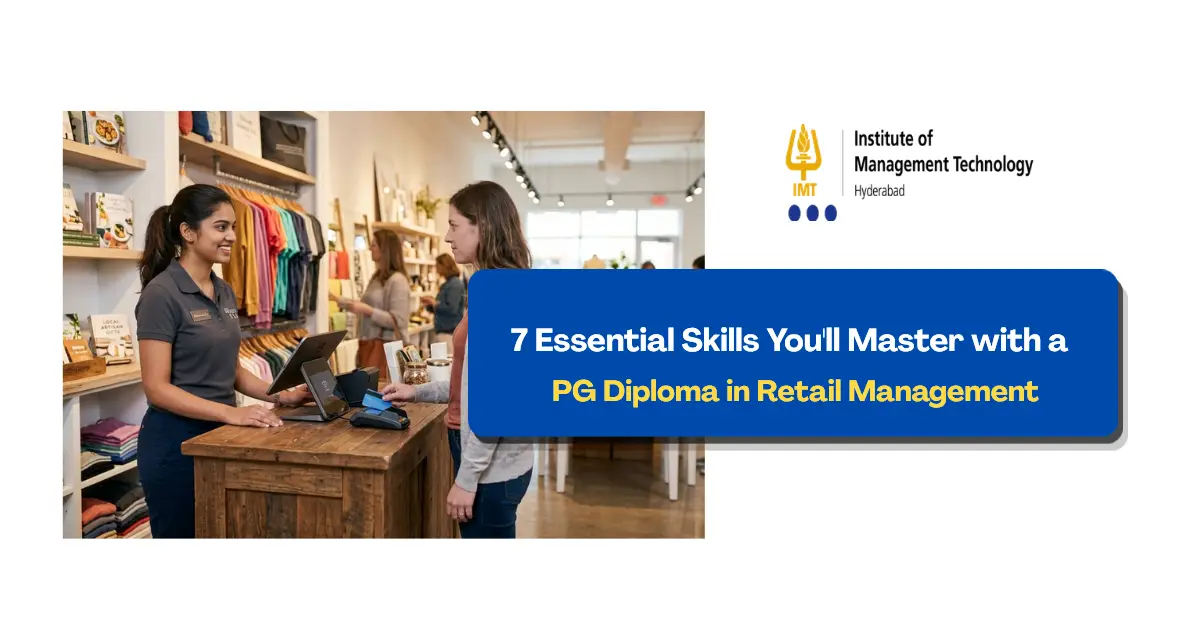
A PG Diploma in Retail Management prepares you to plan, run, and grow businesses that sell directly to customers. It builds seven core, job-ready skills: retail operations, consumer behaviour, merchandising, supply chain and inventory, retail analytics, digital and omnichannel selling, and leadership. These are the exact abilities supermarkets, fashion brands, malls, and quick-commerce apps hire for every single day.
At IMT Hyderabad, you gain these skills through a two-year, AICTE-approved PGDM that is a post-graduate diploma recognised as equivalent to an MBA, with specialisations in Marketing and in Logistics & Supply Chain Management, the two disciplines that power modern retail. India’s retail market is projected to reach US$1.93 trillion by 2030, so the demand for trained retail managers has rarely been stronger.
Why Does a PG Diploma in Retail Management Matter in 2026?
Retail is one of the largest and fastest-moving sectors in the Indian economy. It contributes more than 10 percent of GDP and employs close to 8 percent of the workforce. A PG Diploma in Retail Management matters now because the industry is being reshaped by e-commerce, quick commerce, and demand from smaller cities, and it needs skilled managers faster than it can find them. In short, a PG Diploma in Retail Management turns a booming market into a genuine career opportunity.
| Market signal (India, 2024–2030) | Why it creates jobs |
|---|---|
| Retail market: US$1.06T (2024) → US$1.93T (2030) | A larger market means more stores, brands, and roles to staff and lead. |
| Quick commerce growing 70–80% a year | Apps like Blinkit and Zepto need managers for dark stores, inventory, and delivery. |
| 60% of e-commerce demand from Tier II & III cities | Retail careers are no longer limited to metros — opportunity is spreading. |
| D2C brands and omnichannel expansion | New formats need people who can sell across stores, apps, and marketplaces. |
What Are the 7 Essential Skills You’ll Master with a PG Diploma in Retail Management?
A good retail management course goes far beyond theory. Below is a quick overview of the seven skills you will build, followed by a closer look at each one with a real Indian example. Together, they form the toolkit that a PG Diploma in Retail Management is designed to develop.
| Skill you master | What it lets you do | |
|---|---|---|
| 1 | Retail Operations & Store Management | Run an outlet day-to-day, including staffing, targets, replenishment, and billing. |
| 2 | Consumer Behaviour & Customer Experience | Read why shoppers buy and design experiences that keep them coming back. |
| 3 | Merchandising & Visual Merchandising | Choose, price, and display products so they almost sell themselves. |
| 4 | Supply Chain, Inventory & Category Management | Move products from the supplier to the shelf at the right time and at the right cost. |
| 5 | Retail Analytics & Data-Driven Decisions | Turn sales and footfall data into pricing, assortment, and forecasts. |
| 6 | Digital, E-commerce & Omnichannel Retailing | Sell seamlessly across stores, websites, apps, and marketplaces. |
1. Retail Operations & Store Management
At the heart of retail lies operations — the discipline of keeping a store running smoothly every day. You learn to manage staffing rotas, daily sales targets, stock replenishment, and billing. A DMart or Reliance Smart outlet lives or dies on this operational rigour, because efficient stores are what protect margins and profitability.
2. Consumer Behaviour & Customer Experience
Understanding why shoppers buy is a skill in its own right. India’s shift from neighbourhood kirana stores to apps like Blinkit and BigBasket was driven by a simple demand for convenience and speed. You learn to read shopping patterns, design loyalty programmes, and personalise the experience across both physical and digital touchpoints.
3. Merchandising & Visual Merchandising
Retail is as much about presentation as it is about product. Merchandising teaches you to decide what to stock, at what price, and how to display it for maximum appeal. A well-planned Zudio or Westside floor is no accident — smart placement and visual storytelling are what make products move.
4. Supply Chain, Inventory & Category Management
Products only sell if they reach the shelf at the right time and cost. This skill covers sourcing, warehousing, logistics, and stock control, along with planning a profitable category. Quick-commerce players such as Zepto and Blinkit depend entirely on razor-sharp inventory and dark-store logistics to deliver in minutes.
5. Retail Analytics & Data-Driven Decision-Making
Modern retail is a data business. You learn to turn sales, footfall, and basket data into confident decisions on pricing, assortment, and demand forecasting. Platforms like Nykaa and Amazon personalise offers and predict demand using exactly this kind of analytical judgement.
6. Digital, E-commerce & Omnichannel Retailing
Shoppers now move freely between stores, websites, apps, and marketplaces, and they expect one seamless experience. This skill trains you to run online storefronts and link them to physical outlets. With 60 percent of e-commerce demand now coming from Tier II and III cities, omnichannel fluency has become non-negotiable.
7. Leadership, Team Management & Negotiation
Above every process, retail runs on people. You learn to lead store teams, negotiate with suppliers and brands, and make quick decisions under real-time pressure on the shop floor. These leadership skills are what separate a capable executive from a future store or category head.
Mastered together, these seven abilities are exactly what a PG Diploma in Retail Management is built to deliver and what employers reward when they hire.
Read More: Course in Retail Management: Eligibility, Fees, Career Scope & Retail Management Courses After 12th
How Do These Skills Translate into Retail Careers and Salaries?
The real value of a PG Diploma in Retail Management shows up in the roles it opens and the salaries they command. The table below maps each skill cluster from your PG Diploma in Retail Management to a common job and an indicative pay range in India. Figures are indicative and rise quickly for people who deliver results.
| Skill cluster | Typical role | Indicative salary (INR / year) |
|---|---|---|
| Operations & leadership | Store Manager | 5 to 9 lakh |
| Merchandising & analytics | Merchandiser / Category Manager | 9 to 16 lakh |
| Supply chain & inventory | Supply Chain / Category Executive | 6 to 12 lakh |
| Digital & omnichannel | E-commerce / Omnichannel Manager | 8 to 16 lakh |
| Consumer & operations | Area / Operations Manager | 12 to 25 lakh and above |
Where Should You Build These Skills? IMT Hyderabad’s PGDM Advantage
If you already hold a bachelor’s degree, the strongest route into these seven skills is a full-time PGDM with a retail focus rather than a narrow badge. IMT Hyderabad delivers exactly this through its Marketing and Logistics & Supply Chain Management specialisations — the two areas that drive retail — so a PG Diploma in Retail Management here comes with genuine management breadth.
- National standing: ranked 72nd in the NIRF Management category in 2025, a rise of 25 places in a single year.
- Placement record: a 2025 average package of around INR 12 lakh, with top offers above INR 25 lakh.
- Recognition: AICTE approval, NBA accreditation, SAQS, and AACSB membership give your qualification real weight with employers.
- Location advantage: Hyderabad is one of India’s fastest-growing retail and e-commerce hubs, supporting internships and hiring.
- Applied learning: a residential campus, live projects, and a mandatory summer internship turn classroom theory into job-ready experience.
Leading recruiters for these skills include Reliance Retail, Trent (Westside and Zudio), Aditya Birla Fashion and Retail, Avenue Supermarts (DMart), Amazon, Flipkart, Nykaa, Blinkit, and Zepto — a mix of traditional and digital-first retail that reflects where the sector is heading.
Advisory: Fees, intake, and rankings change every year. Always confirm the current eligibility and PGDM intake on the official IMT Hyderabad admissions page before you apply.
Final Thoughts
Retail is one of the few industries where you can learn on your feet and rise quickly. The seven skills above — operations, consumer behaviour, merchandising, supply chain, analytics, omnichannel selling, and leadership — are the foundation of every successful retail career. A PG Diploma in Retail Management, or a closely related PGDM at an institute like IMT Hyderabad, packages them into a single, recognised qualification. Compare the eligibility, fees, and placement record side by side, choose an accredited college, and a PG Diploma in Retail Management can turn one of India’s fastest-growing industries into a long and rewarding career.
Frequently Asked Questions
What is a PG Diploma in Retail Management?
A PG Diploma in Retail Management is a postgraduate programme that teaches you to run businesses selling directly to customers. It covers store operations, merchandising, supply chain, consumer behaviour, retail marketing, analytics, and e-commerce, and prepares graduates for management roles across retail.
What skills will a PG Diploma in Retail Management give you?
It builds seven core skills: retail operations and store management, consumer behaviour, merchandising and visual merchandising, supply chain and inventory, retail analytics, digital and omnichannel retailing, and leadership with negotiation. Together they cover both the shop floor and the strategy behind it.
Does IMT Hyderabad offer a PG Diploma in Retail Management?
IMT Hyderabad offers a two-year, AICTE-approved PGDM — a post-graduate diploma recognised as equivalent to an MBA — with specialisations in Marketing and in Logistics & Supply Chain Management. These are the two disciplines that power retail, giving graduates a broad, recognised qualification for retail, consumer, and supply-chain roles.
What is the eligibility for a PG Diploma in Retail Management?
For a PGDM route, you need a bachelor’s degree in any stream with around 50 percent marks, plus a valid entrance score such as CAT, XAT, CMAT, or GMAT, followed by a personal interview. Shorter diplomas may admit graduates directly. Always confirm the exact cut-off on the institute’s official page.
What jobs and salary can you expect after a PG Diploma in Retail Management?
Graduates work as store managers, merchandisers, category managers, retail buyers, e-commerce managers, and supply-chain executives. Early-career pay typically ranges from INR 5 to 9 lakh a year, rising to INR 9 to 16 lakh at mid level and well beyond for senior operations roles.
Is retail management a good career in 2026?
Yes. India’s retail market is heading towards US$1.93 trillion by 2030, quick commerce is expanding rapidly, and demand is spreading into smaller cities. The sector needs trained managers faster than it can find them, which keeps job prospects strong.
Related Blogs

Top PGDM Colleges in South India: Find the Right B-School for You
The top colleges for PGDM in South India include IMT Hyderabad, Great Lakes Institute of…
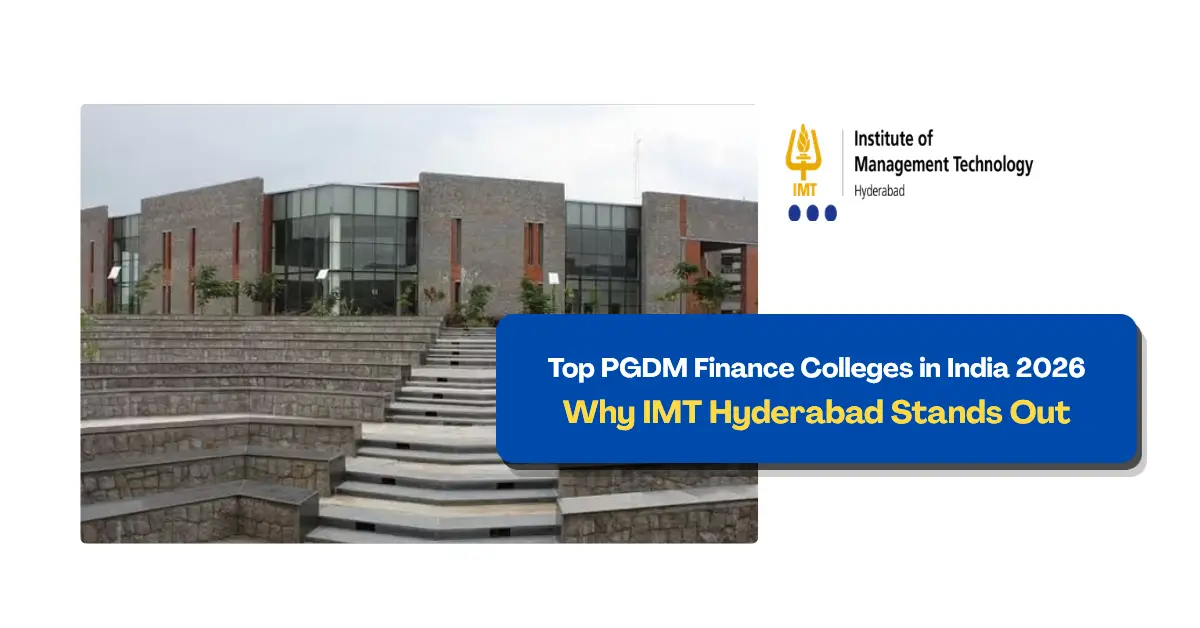
Top PGDM Finance Colleges in India 2026: Why IMT Hyderabad Stands Out
Top 10 PGDM finance colleges in India 2026 are IIM Ahmedabad, IIM Bangalore, SPJIMR Mumbai,…
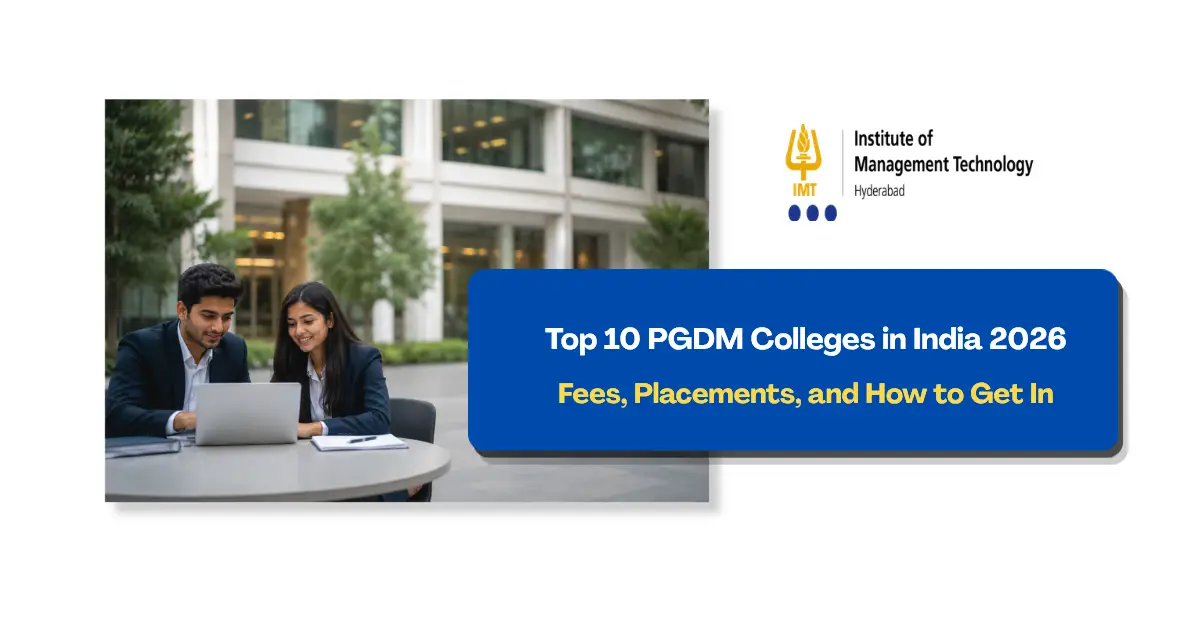
Top 10 PGDM Colleges in India 2026: Fees, Placements, and How to Get In
Every management aspirant who starts researching the top PGDM colleges in India runs into the…

Why Every Marketer Needs Basic Supply Chain Knowledge in the Digital Era
Introduction There was a time when marketing ended the moment an advertisement went live. Today,…
PGDM Course in India: Subjects, Eligibility & Best Colleges for PGDM in India
A PGDM course in India is a two year, full time Post Graduate Diploma in…
Wealth Management Course in India: A 2026 Guide to Skills, Certifications, and a High-Growth Finance Career
India is in the middle of one of the largest wealth-creation waves in its history,…