Can India Be the Torch Bearer of the AI Marketing Future?
Home / Academic / Can India Be the Torch Bearer of the AI Marketing Future?
Introduction
Every few years, a new wave defines how marketing is done. Once, it was radio. Then came television. Later, the internet. Now, Artificial Intelligence is quietly taking centre stage. It does not announce itself loudly, yet everything around us, the ads we see, the products we are recommended, even the timing of an email, already carries its signature.
India, with its restless energy and curiosity, stands at a very interesting crossroad. The question is no longer whether AI will influence marketing, but whether India has the mindset and skill base to lead this change. In truth, it is not a futuristic fantasy; it is happening already in classrooms, startups, and digital agencies across the country.
What Is Marketing Analytics?
When students first hear the phrase marketing analytics, it sounds like something complicated that only large corporations deal with. But it is really about understanding behavior. Every click, every scroll, every purchase is a factor to study and analyze. Marketing analytics helps decode the insights.
In practice, it means learning from data to make better choices. An aesthetic clinic might study which posts attract more clients to its sales page. A company may test which advertisement works best in a particular city. It is about evidence replacing guesswork.
Artificial Intelligence now takes this to another level. Algorithms can read enormous datasets and find what even seasoned professionals might miss. For instance, if a fashion brand notices that young customers stop watching its video at the 12-second mark, AI can identify what moment caused the drop and suggest a fix within minutes.
A report from McKinsey once pointed out that organizations using strong analytics frameworks enjoy nearly 20% higher returns on marketing investments compared to those that do not. That gap is widening every year.
Why Marketing Metrics Matter in the Age of AI
Numbers alone cannot make decisions, but they help us ask the right questions. Marketing metrics are those guiding numbers, conversion rate, engagement, retention, or even customer satisfaction. They are what show whether an idea is succeeding or fading.
With AI tools, these metrics are not just recorded; they are continuously interpreted. When a campaign underperforms, the system learns and adapts. A few examples:
- A travel company can test which image convinces users to click “Book Now”.
- A college can learn which keywords bring the most relevant student leads.
- Even tone and phrasing can be adjusted automatically for different audiences.
Students entering this field should treat metrics as living indicators, not static numbers. Knowing how to read them is as important as knowing how to write a good ad. AI will do the calculations, but humans still decide why those numbers matter.
Why India Could Lead the AI Marketing Story
Few countries combine youth, scale, and technology readiness the way India does. Over 900 million people here are expected to be online by 2025 end. That is a huge audience, but also a massive learning opportunity.
Add to that a thriving startup culture, digital-first brands, and a generation comfortable with both technology and creativity. We are not merely using global tools; many Indian firms are building their own. From regional language chatbots to AI-based influencer analysis platforms, innovation is spreading beyond metros.
Another reason India stands out is its diversity. AI systems need diverse data to learn well. Our country offers exactly that, a cultural, linguistic, and behavioural variety. What works in Kochi may not work in Jaipur, and that very difference becomes a valuable training ground for AI marketing models.
So yes, India has every reason and resource to carry the torch forward. What we need next is a sharper focus on education and industry collaboration.
How Can Students Prepare Themselves?
Students often ask, “Where do I even start?” The answer is simpler than it seems.
Start by being curious. Read about how AI is used in everyday marketing. Try to connect classroom concepts to the campaigns you see online. If you see an ad appear at just the right time, ask yourself what data might have triggered it.
Then, gradually move to tools. Explore Google Analytics, HubSpot, or Tableau. Many of them offer free versions or student licences. Learn to build small dashboards that connect campaign outcomes with audience behaviour. Finally, practice interpreting insights. Numbers make sense only when connected to human stories. Ask questions such as:
- Why did people click on one image more than another?
- Was timing the reason, or the message the reason?
- How might culture influence response?
These reflections train the mind to think both logically and empathetically, something no algorithm can replace.
How Should Top Management Universities in India Respond?
Educational institutions have a decisive role. The industry no longer needs marketers who only understand creative slogans. It now seeks individuals who can translate between creativity and computation. That requires updated syllabi and live exposure.
Subjects such as marketing analytics, AI for decision-making, and data interpretation in consumer behaviour should be treated as essentials. Students must also develop soft skills. These can be ethical reasoning, communication, and adaptability, because AI tools will keep evolving. The ability to learn continuously will matter more than memorising any software.
What Makes IMT Hyderabad a Step Ahead
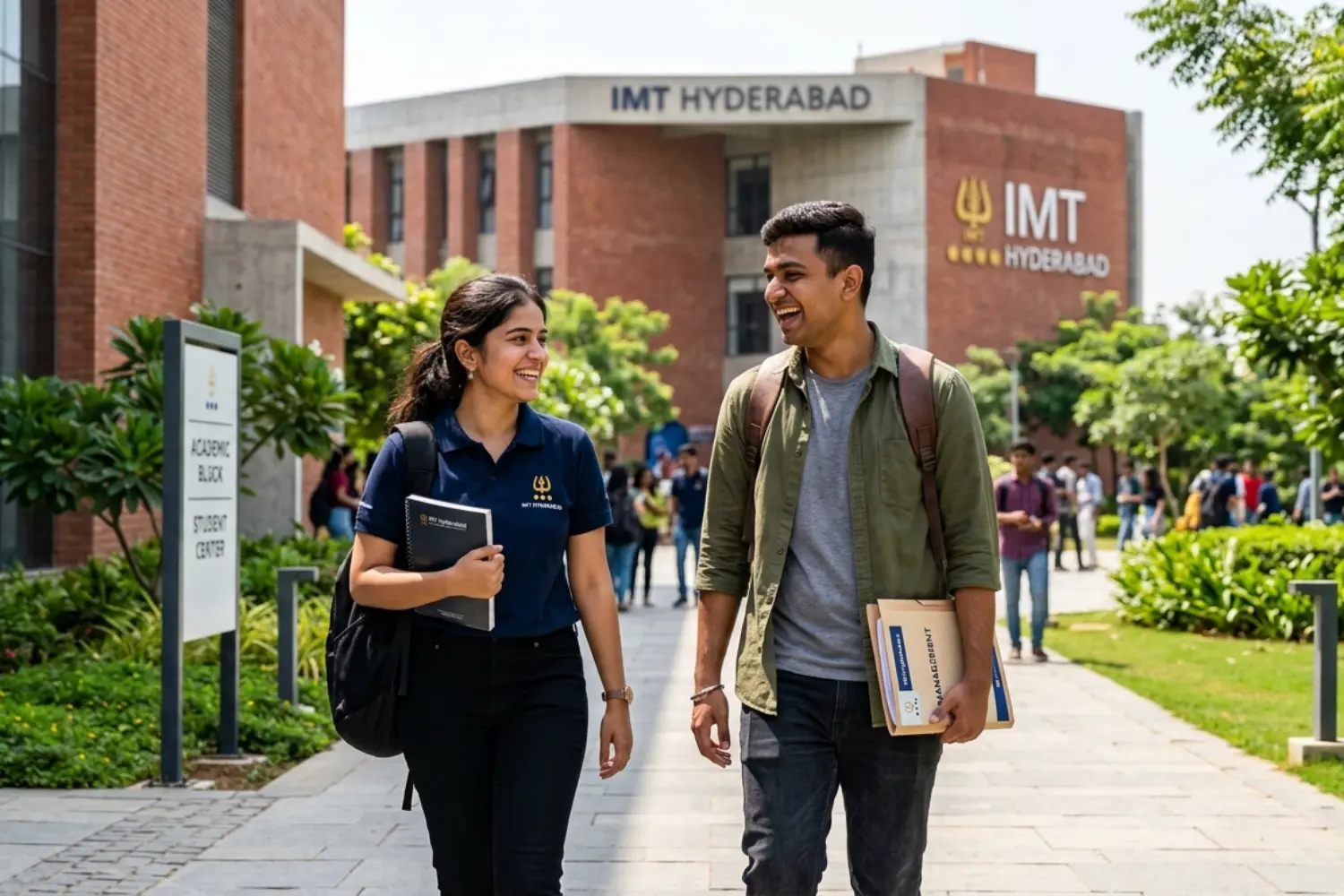
Located close to one of India’s fastest-growing innovation corridors, IMT Hyderabad has designed its programmes to stay in step with this transformation. The campus merges business understanding with technological awareness. Students learn through projects that simulate real business scenarios, often supported by live industry data.
They engage directly with visiting experts who work in analytics, media planning, and digital transformation. The institute encourages each student to explore intersections:
- Marketing With Technology
- Creativity With Analysis
- Data With Decision-Making.
More importantly, IMT Hyderabad fosters a mindset of questioning. That habit, to pause, reflect, and then act, is what differentiates a future leader from a follower.
Moving Forward With Confidence
AI will continue to reshape marketing, but the real success will belong to countries that can humanise it. Data alone cannot move people. It takes empathy, culture, and storytelling, all qualities that India holds in abundance.
The next decade will test how our young marketers balance both sides, logic and emotion, automation and authenticity. The answers will come from classrooms, internships, and the willingness to learn beyond comfort zones.
So, to every student reading this: the race has already begun. Learn the numbers, feel the narrative, and never stop questioning how technology can serve humanity, not replace it.
At IMT Hyderabad, we believe the future of marketing will not be written by machines, but by humans who know how to talk to them wisely.
Related Blogs

A New India: Shaping Global Sustainability Trends
Shrijal As an introverted soul with a deep love for literature, I find…
IMT Hyderabad Placement Report 2025: Real Numbers, Real Outcomes, Real Careers
After every competitive exam, every MBA aspirant inevitably confronts the question of whether a postgraduate…

Top 5 B-Schools in Hyderabad
IMT Hyderabad: Based on a 30-acre campus, IMT Hyderabad provides a 2-year full-time PGDM course…

US – Venezuela’s Caracas – A deep dive
Sri Lasya Priya Ammu PGDM IT Sculpting thoughts to connect, looking to feel affinity, reading…

Does Business Always Mean Risk-Taking?
Frankly speaking, the word business today covers almost every part of working life. From the…

Finance Courses with Placement in India — Colleges, Recruiters & Salary Data (2026)
1. Why is the placement record the most important metric when choosing a finance course…