
Built for Pace, Engineered for survival
Home / Informative / Built for Pace, Engineered for survival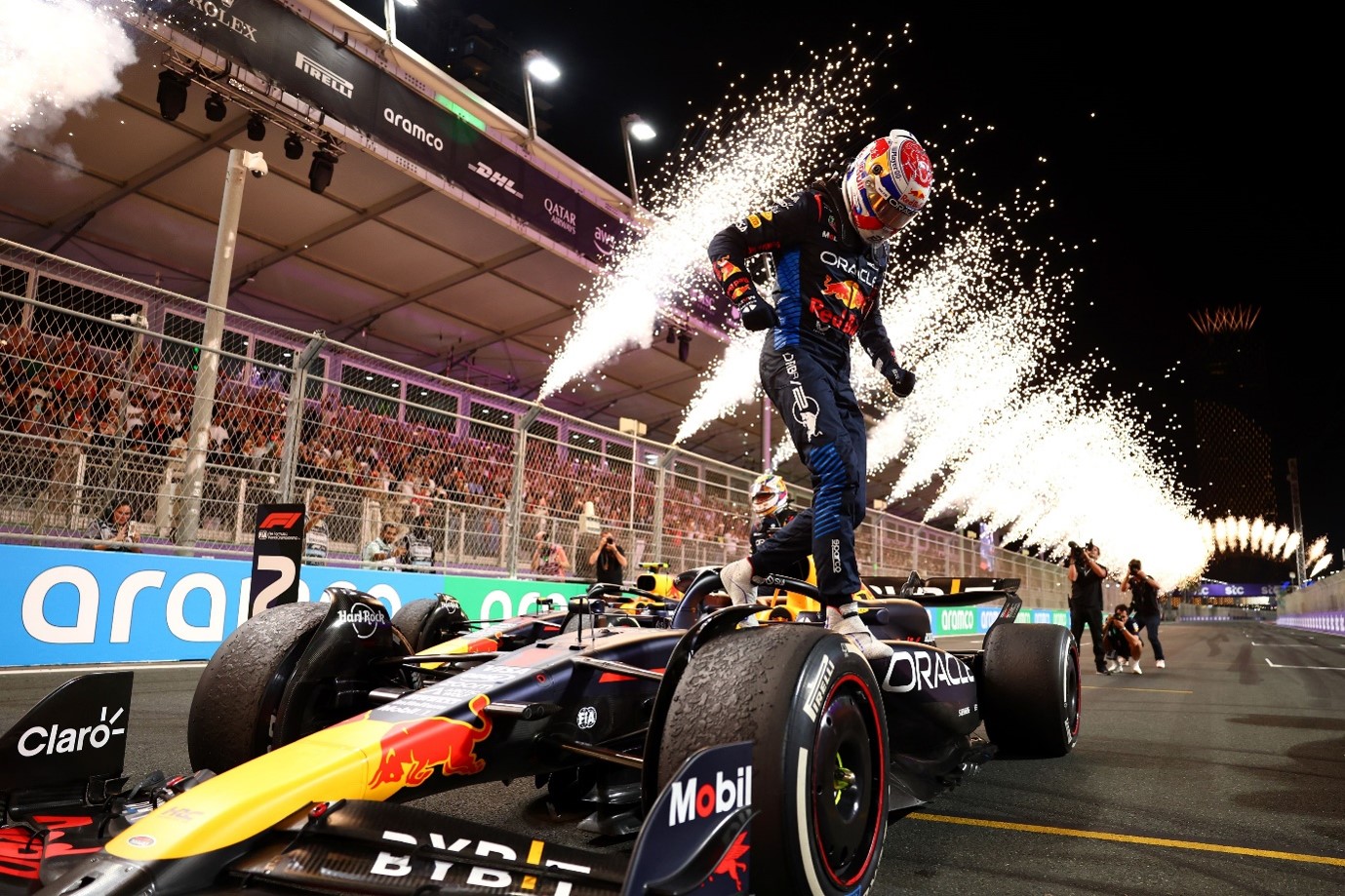

Priyanka Misra
PGDM Core
Formula 1 is celebrated worldwide for its lightning fast speed, podium glory and technological brilliance. Every fan has their own absolute favourite drivers who they admire and passionately root for every single race weekend. But behind every high-speed race is a vast network of people across every facet of the sport coming together to make this possible. From engineers designing high performance vehicles to medical and rescue teams available on ground ready to respond to any emergency within seconds. At 300 Kmph, performance and survival exist in a delicate balance where every aerodynamic innovation that helps in increase in speed of the vehicle requires an equal investment in impact-absorbing engineering.
Safety and innovation were not born in quiet isolation rather through devastating tragedies that taught harsh lessons and forged the mandatory safety protocols we see today. The catalyst that forced a complete redefinition of F1 safety regulations occurred on May 1, 1994, at the San Marino Grand Prix in Imola. The three-time Formula 1 World Champion and Williams F1 Driver, Ayrton Senna was involved in a fatal accident. Prior to the race, Senna had heavily criticised the FIA’s decision to ban active suspension. According to FIA, these electronic aid and computer devices provided an unfair advantage to the wealthier teams like Williams-Renault but Senna vocalised the danger associated with the ban stating that it made the car unstable without reducing the speed. High-speed sections like Tamburello Corner lacked adequate run-off areas and inclusion of safety car as mandated by FIA further added to the risk. During the race, Senna lost control on the cold tires and crashed into the concrete wall. Broken suspension rod pierced into his helmet visor. Investigators later concluded that a faulty steering column modification made by Williams was the primary reason, though a complex combination of factors ultimately led to the crash.
In response to these tragedies, the FIA implemented technical and operational reforms, focusing heavily on necessary driver protection systems. Among these life-saving innovations, the Head and Neck Support (HANS) device which was mandated in 2003, anchored driver’s helmets to prevent catastrophic basilar skull fractures during sudden deceleration. Decades later, Titanium Halo structure was introduced above the cockpit which helps in deflecting heavy airborne debris away from driver’s head. Together with aerodynamic changes, reinforced tracks, and reinstated Grand Prix Driver’s Association were the technological leaps which fundamentally transformed Formula 1.
Fast forwarding to 2020 Bahrain Grand Prix, decades of aggressive safety regulations and complex engineering marvels were put to test when HAAS F1 driver, Romain Grosjean crashed into the metal barrier. Although the guardrail was designed for maximising impact absorption, the 67 G impact of the crash caused the barrier to break, separating the survival cell from the rest of the vehicle. With the fuel tank and electrical wires completely exposed, the vehicle immediately caught fire, reaching temperatures up to 800°c with Grosjean still trapped inside the inferno.
Miraculously, Grosjean survived, leaping out of the inferno and earning himself the nickname of “The Phoenix”. His life was saved by the combined defense of five key technologies: robust carbon survival cell keeping the cockpit intact, the HANS device and advanced helmet protecting the driver from fatal head and neck injuries, the titanium Halo deflecting the barrier rail and the advanced fire-resistant Nomex suit providing crucial protection, along with swift intervention from the FIA Medical team.
While the Bahrain Grand Prix proved that modern F1 safety regulations and engineering design changes truly work, the crash also revealed critical gaps that needed to be addressed. The investigations emphasized on necessary changes which included enhanced fire-resistant gloves, strengthened fuel hatch fasteners, and improved headrest security. Additionally, pedal boxes were redesigned to prevent foot entrapment during severe impacts, and barrier absorption at the crash site was thoroughly reinforced.
F1 innovation is not limited to speed and surviving crashes, it is equally about efficiency and sustainability. The continuous pursuit for engineering excellence provides a testing ground where track tested innovations move straight into everyday transport and worldwide industry. Manufacturers like BMW and Renault-Nissan are using F1-pioneered carbon fiber architectures in consumer electric vehicles. The carbon-fiber-reinforced plastic (CFRP) “Life Module” passenger cell was officially implemented into mass production in 2013 for the BMW i3 and in 2014 for the BMW i8. Modern aircraft are also shifting towards carbon fiber structures to become “environmental game changers”.
There is a story behind every F1 victory that goes far beyond the podium. Behind every driver we root for stands a dedicated group of engineers, rescue teams, and trackside marshals, working endlessly to make sure chasing speed never demands the ultimate price. The safety innovations born from the sport’s painful history have not only rescued drivers from the inferno but they quietly protected families on public roads across the world. When we watch our favourite drivers push the limits and cross the line, we are not just witnessing individual genius but we are honouring the invisible shield built by thousands of dedicated hands.
Image Source: Click Here
Related Blogs

THE REHARSAL WE CALL HISTORY
Aprajita Bhardwaj PGDM Core From ECGs to case studies, my curiosity just finds new things…
A Street, A Stare, A System
Meghana CH PGDM Core Aspiring to be a decent writer, beginning the journey one…

The Mystery of missing out
Bhavesh Pathak PGDM Core Pondering about the unknown with curiosity and a never-ending imagination. Indulging…

Sneakers: The modern-day Gold
Priyanshu Garg He brings many different perspectives to his writing through research and…
No Country for Young Men: A Treatise on Bihar’s Becoming
Janvi PGDM Core Working in introspection, cultural quirks, and observations into writing, and bringing in…
Lessons from the Flames: Wildfires and Climate Change
Devanshu A B.Com Honours graduate, this boy brings a calm, composed, and optimistic approach…