

Meghana CH
PGDM Core
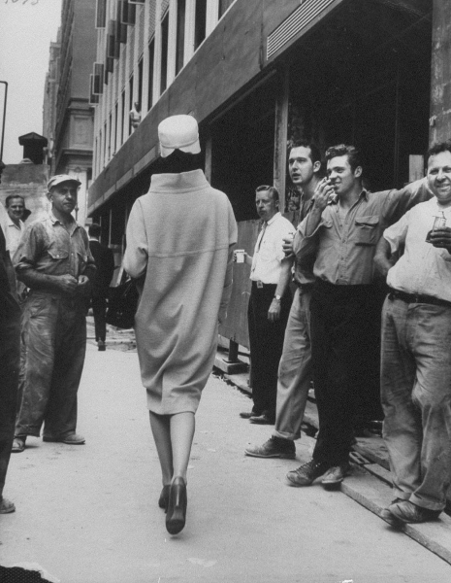
Street harassment in India is often taken as mere teasing or flirting; however, recent studies have come up with street harassment being a barrier to mobility and economic inclusion of women. Catcalling involves making unwelcome remarks, whistling, horn blowing, lewd gestures, and suggestive remarks targeted at women in public places. In India, this type of harassment is widely known as “eve teasing” a term that is said to be misleading and subversive in an iDare article “Why We Must Stop Using the Term ‘Eve-Teasing’ and Call It What It Is: Sexual Harassment”. The article further notes that the phrase references to biblical Eve, who is often labelled a temptress, thus subtly shifting the responsibility onto women rather than the actual perpetrators.
Street harassment is neither new nor unique to India. Within patriarchal societies, public spaces have always been gendered with streets, marketplaces or work places dominated by men while women’s access to such spaces was regulated either through custom or law. Historically, women’s mobility was restricted “for their own protection”. According to the research paper “Words That Pierce: Discursive Constructions of Catcalling”, catcalls serve to remind women that they are continually being watched, evaluated and objectified.
The prevalence of harassment in India remains alarming. As per the article entitled “Women Walk Alone to Reclaim India’s Streets from Fear and Harassment” by The Guardian, in an ActionAid survey nearly 79 percent of Indian women have reported harassment or assaults in public places. In addition, according to figures provided by the NCRB the rate of violence against women in India rose from 57 to 67 per 1,00,000 women from 2020 to 2022. Women aged between 18 and 30 years continue to be vulnerable to public assault. However real statistics may be even higher due to underreporting driven by societal stigma and mistrust in the system.
Moreover, the psychological effect of catcalling is much more serious than just a momentary unpleasant feeling. In a paper called “What Is Eve Teasing? A Mixed-Methods Study on Sexual Harassment of Young Women in the Rural Indian Context”, the researcher states that harassment can cause feelings of fear, anger, embarrassment, feeling powerless, and emotional distress. A large number of women take precautionary measures either consciously or sub-consciously by changing their mode of travel, avoiding the use of public transport, dressing differently, or even reducing their mobility outdoors in an effort to protect themselves from harassment.
Street harassment also has significant implications for women economically and educationally. An article titled “How Police Patrols Reduced Severe Street Harassment in India” explains there are cases where women give up as much as 20% of their potential earnings because they opt for safer yet less prestigious schools, universities, jobs, and neighbourhoods. This is referred to as “educational downgrading,” which affects women’s career prospects, while figures from the World Bank indicate that gender-related violence costs countries 1.2% to 3.7% of their GDP.
The normalization of harassment through media and pop culture is further reflected in the article “Bollywood Songs That Objectify Women, Romanticise Harassment & Obliterate Consent”. The article emphasizes that songs such as “Buzz”, “Tu Cheez Badi Hai Mast Mast”, “Gandi Baat” etc through catchy tunes and appealing visuals frequently conceal deeper social issues related to gender stereotyping and patriarchal attitudes such as stalking, toxic masculinity, and the objectification of women.
In response to the problem of continued harassment, various cultural, political and social movements and awareness campaigns have emerged in recent years. Social media campaigns like #NotACompliment and #IAmTired have been utilized by women to express their views regarding the topic. Institutional efforts like SHE teams of Hyderabad, Safety audits of Delhi, Gender-sensitive public transport in Bogota, and Women’s Night Safety Charter in London were also initiated. Blank Noise Collective, founded by Jasmeen Patheja, whose campaign includes “Walk Alone”, is aimed at reclaiming public spaces for women. “Be a Hero, Stop Harassment!” by Breakthrough India encourages bystander intervention and accountability in public spaces.
But is it right to refer to spaces as “public” when half of the population is forever dealing with their fear in the same space? Do women have to change themselves, how they dress, where they go, or even what they aspire to just to be safe? At what point does silence from bystanders become participation in the problem itself? With harassment being normalized through popular culture, entertainment, media, and even common discourse in daily conversation, will there ever be change if laws are implemented alone? Will it make sense if there is no collective responsibility from citizens and different entities in order to make change happen? The real question might not be on whether catcalling is dangerous or not – the answer to which we already know – but whether society is willing to confront the systems that continue to normalize it.
Related Blogs

Living with the New Normal: Problems and advances in the Education sector
Prachi Mehta An outgoing introvert who believes in the art of articulation, voracious to…
Convenience VS Confidentiality : The Privacy Paradox
Shruti Mishra Bringing fresh perspective to ideas, exploring the world and writing about…

The Unconvincing Case of Deep-Sea Mining
Arisha Ali Rahi A girl who loves writing, whether it be fiction or not….
From West to BRICS: The Next Global Superpowers?
Devanshu A B.Com Honours graduate, this boy brings a calm, composed, and optimistic…
Individuation: The Concept of Self
Jaskaran Gill PGDM Core Driven by curiosity and an urge to write constantly, He…

Lessons from the Flames: Wildfires and Climate Change
Devanshu A B.Com Honours graduate, this boy brings a calm, composed, and optimistic approach…