
The secret language of communication cues
Home / Creative Writing / The secret language of communication cues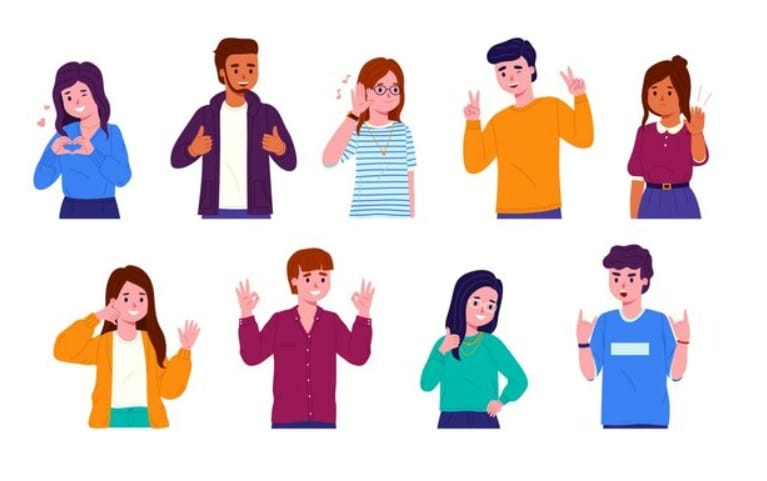

Padma Poojitha Movva
PGDM Core
Have you ever been bored as hell due to a dragged-out meeting, nodding in despair, and planning a weekend in your mind, and boom, someone called you? You try giving a sweet smile as a response, but it may give away a “leave me alone” vibe. Or when you are deep into a fight and screaming like crazy, but suddenly your throat feels struck and your eyes get all wet. We all had these oops moments, when our faces gave different subtitles to our audio, and our bodies betrayed us. This is the crazy and chaotic world of communication cues, the silent signals that we exchange without our own awareness.
“Actions speak louder than words” proves true when it comes to communication cues. As you are engaged in talking, your eyes, your hands, and even your voice give away what you are hiding in your heart.
Eyes indeed are the mirror to your soul. They dilate due to panic and hover in all directions when bored (the notorious side-eye). Your arms might be giving away all your secrets. Closed arms often convey discomfort, while open arms signal approachability. Fidgeting and tapping your arms may reveal your anxiousness. Foot tapping signals your impatience and urgency to leave.
Your face might be missing in action for candid Instagram pictures, but micro expressions? They’re consistently clocked in, overtime, and fully committed to exposing you. The eyebrows rise for “What did you just say?” and the nose scrunches for disgust, happening involuntarily and exposing your actual thoughts. Your voice conveys your excitement and/or boredom by through its pitch. A higher pitch shows your excitement, while a monotone shows your boredom.
These unconscious movements and micro expressions reflect your genuine feelings before your mind steps in and filters them out. Having knowledge about this unconscious language technique, it is now time for you to turn the tables around and take advantage of this information. Make sure you catch micro expressions from others, at the same time do not forget to monitor your own tells. Fake it until you make it. Refrain from crying during a fight and force yourself to wear the face of active listening during a boring meeting. And the best trick in the book is to use them to connect with others. Carefully orchestrate your body language and expressions in job interviews and seminars to truly capture your audience. Mirror others’ body language to bond with them, understand their tells, and offer them comfort.
Your cues can be your best friend or worst enemy. Don’t let your face and body sell you out. Train them. Own them. And sometimes surrender-because nobody’s perfect.
Related Blogs
THE RISE OF CITIZEN JOURNALIM: A THREAT OR A REVOLUTION?
Anisha Kochar PGDM Core Observing quietly, writing deliberately, she looks for meaning in the…

The Invisible Storyteller of Cinema
Meghana CH PGDM Core Aspiring to be a decent writer, beginning the journey one…

Existentialism: A Guide to Create Your Own Living
Jaskaran Gill PGDM Core Driven by curiosity and an urge to write constantly, He looks…

NVIDIA: THE CHIP DOMINANCE
S Hafsah Sayeedah PGDM Core Guided by curiosity and grounded in learning, she…
Are we Addicted to Being Right?
Jaskaran Gill PGDM Core Driven by curiosity and an urge to write constantly, He…

The Many lives of the Cat in Art History
Janvi PGDM Core Working in introspection, cultural quirks, and observations into writing, and bringing in…