PG Diploma in Logistics: Scope, Eligibility, and Career Opportunities in India
Home / PGDM / PG Diploma in Logistics: Scope, Eligibility, and Career Opportunities in India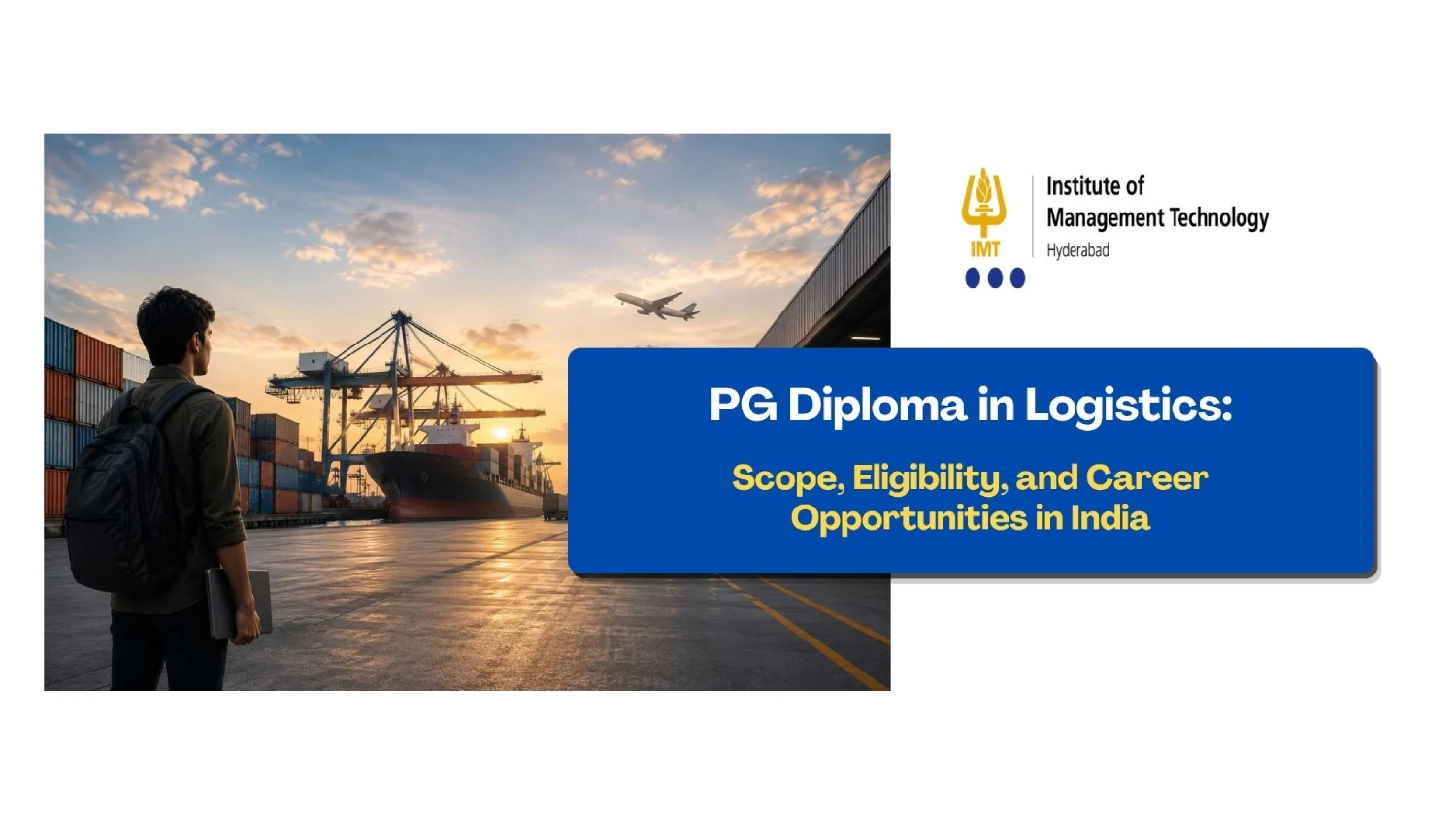
Logistics has moved from a back-office function to one of the most strategically important areas of modern business. As organisations compete on the speed, cost, and reliability of delivery, demand for professionals who can manage the movement and storage of goods has grown sharply. A PG Diploma in Logistics is one of the most direct and practical routes into this field, equipping graduates with the specialised skills that employers across e-commerce, manufacturing, retail, and shipping actively seek.
This guide explains what the qualification involves, who is eligible, what the curriculum covers, and the career opportunities and salary potential it can unlock. It also outlines how the PGDM in Logistics and Supply Chain Management at IMT Hyderabad prepares graduates for leadership roles in this expanding sector.
What Is a PG Diploma in Logistics?
A PG Diploma in Logistics is a postgraduate qualification, typically completed over one to two years, that provides focused training in the planning, execution, and control of the flow of goods and services. The programme covers the full journey of a product, from sourcing and procurement through warehousing, inventory management, and transportation, to final delivery to the customer.
In India, one of the most recognised formats of this qualification is the Post Graduate Diploma in Management (PGDM) with a specialisation in logistics and supply chain. This format combines a strong management foundation with sector-specific expertise, which makes it a practical, industry-focused route for graduates who want to enter logistics and supply chain roles without committing to a longer programme.
Why Is a Logistics Qualification in High Demand in India?
India’s logistics sector is among the fastest-growing in the country, supported by sustained government investment in infrastructure and trade facilitation. Policy initiatives such as the National Logistics Policy and the PM Gati Shakti programme aim to reduce logistics costs and improve efficiency across road, rail, air, and sea networks.
At the same time, the rapid expansion of e-commerce, the growth of organised retail, and the consolidation of warehousing following GST reform have created a structural shortage of trained logistics professionals. This gap between demand and qualified supply is precisely what a PG Diploma in Logistics is designed to address, which makes it a qualification with strong employment prospects for the years ahead.
What Are the Eligibility Criteria for Admission?
Entry requirements are generally straightforward, although they vary by institution. Most programmes ask for the following:
- A bachelor’s degree in any discipline from a recognised university, usually with a minimum aggregate of around 50 per cent.
- A valid score in a recognised management entrance examination, such as CAT, XAT, CMAT, or GMAT, where applicable.
- Performance in a personal interview and, at some institutions, a group discussion or written assessment.
Some programmes, particularly those designed for working professionals, admit candidates on the basis of merit and relevant experience rather than entrance scores. Applicants should always confirm the specific requirements with their chosen institution.
What Does the Curriculum Cover?
A well-structured programme balances management fundamentals with specialised, sector-specific knowledge. Core areas typically include:
- Supply chain management and operations strategy
- Procurement, sourcing, and vendor management
- Inventory control and warehouse management
- Transportation, distribution, and freight management
- Demand forecasting and capacity planning
- International trade, export and import documentation, and customs procedures
- Logistics technology, including ERP systems and supply chain analytics
- Management foundations in finance, marketing, economics, and human resources
Many programmes reinforce classroom learning with live projects, industry visits, case studies, and internships, which give students practical exposure before they enter the workforce.
What Career Opportunities Follow a PG Diploma in Logistics?
Career options are broad and span almost every sector that moves physical goods. Common roles include:
- Supply chain analyst
- Logistics coordinator
- Warehouse operations manager
- Transportation and fleet manager
- Procurement and sourcing executive
- Demand and inventory planner
- International logistics manager
Graduates find opportunities across e-commerce, third-party logistics, manufacturing, fast-moving consumer goods, pharmaceuticals, retail, and shipping. Employers in this space include major e-commerce platforms, global courier and freight companies, and large manufacturing and distribution businesses. Institutions with strong placement relationships give graduates a clear advantage when entering this competitive market.
What Salary Can Graduates Expect?
Earning potential depends on the institution, the role, the location, and prior experience. Industry sources commonly indicate entry-level packages in the region of INR 4 to 8 lakh per annum, with experienced professionals in mid-level roles earning considerably more. As supply chains become more technology-driven and data-led, professionals who combine logistics expertise with analytical skills tend to command the strongest packages.
How Does IMT Hyderabad’s PGDM (LSCM) Support Your Career?
For candidates seeking a rigorous, industry-aligned route into the field, IMT Hyderabad offers the PGDM in Logistics and Supply Chain Management, a post-graduate diploma programme dedicated to logistics, operations, and global trade. The programme is designed to build practical competence in operations, inventory management, and international trade, alongside the broader management capabilities that leadership roles demand.
Students benefit from an industry-aligned curriculum, exposure to live projects, and the institute’s placement relationships with employers across sectors. For applicants who want a focused qualification with strong career outcomes, the PGDM (LSCM) is a compelling option.
How Can You Apply?
Admission to the PGDM (LSCM) follows IMT Hyderabad’s standard PGDM admissions process. Prospective students are encouraged to review the eligibility criteria, entrance requirements, and application timelines, and to contact the admissions team for guidance specific to their background and goals.
Frequently Asked Questions
Is a PG Diploma in Logistics a good career choice?
Yes. With sustained growth in e-commerce, manufacturing, and trade, demand for trained logistics professionals continues to rise, which makes this qualification a strong and increasingly valuable career investment.
What is the duration of the course?
Most programmes run for one to two years, depending on the institution and whether the course is full-time or designed for working professionals.
Can working professionals enrol?
Yes. Many institutions offer formats suited to working professionals, and the focused, practical nature of the qualification makes it well suited to those looking to formalise or advance an existing career.
What is the average salary after completing the programme?
Entry-level salaries are commonly cited in the region of INR 4 to 8 lakh per annum, rising significantly with experience and specialisation.
Does IMT Hyderabad offer a PG Diploma in Logistics?
IMT Hyderabad offers the PGDM in Logistics and Supply Chain Management (PGDM LSCM), a post-graduate diploma programme focused on logistics, operations, and supply chain management.
Conclusion
A PG Diploma in Logistics offers a practical, focused, and increasingly valuable pathway into one of India’s most dynamic sectors. For graduates ready to build a career in supply chain and logistics, choosing a programme backed by an industry-aligned curriculum, real exposure, and strong placement support makes a measurable difference. The PGDM in Logistics and Supply Chain Management at IMT Hyderabad is designed to deliver exactly that.
Related Blogs
Services Marketing: A Complete Guide to Marketing the Intangible
Services marketing is the branch of marketing that focuses on promoting and selling intangible offerings,…
Why Hyderabad Is India’s Best City for MBA/PGDM in 2026: A Complete Guide
Introduction: The City You Choose Could Define Your Career When it comes to pursuing a…

Best Finance Courses in India 2026 — Complete Guide by IMT Hyderabad
1. Introduction — Why Finance Education Matters Right Now in India India’s financial ecosystem is…
UPI, India’s Own Payment Method: A Modern Lesson for PGDM Courses and Future Business Leaders
Summary The Unified Payments Interface, known widely as UPI, has become the defining symbol of…
PGDM Course Subjects at IMT Hyderabad: A Complete Guide to the Curriculum
Choosing a postgraduate management programme is a significant decision, and understanding the PGDM course subjects…