
THE ROLE OF ART AND CREATIVITY IN TIMES OF CRISIS
Home / Creative Writing / THE ROLE OF ART AND CREATIVITY IN TIMES OF CRISIS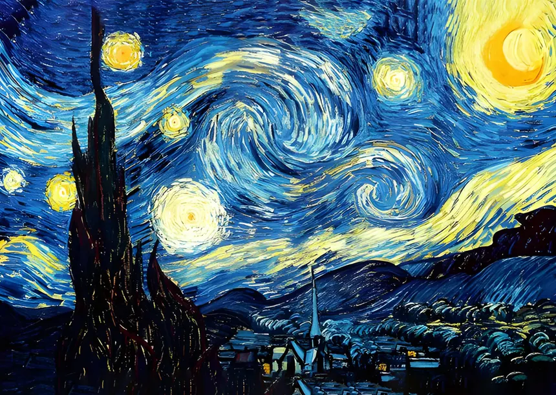

Harshith Ram
PGDM Core
What do great minds like Sir Isaac Newton, William Shakespeare, and Vincent van Gogh all have in common? Apart from their great influence, their best works were produced during times of crisis. For Isaac Newton and William Shakespeare, it was a plague that led them to discover Gravity and write ‘King Lear’ respectively. For Vincent van Gogh, it was his crippling anxiety and depression that led him to paint his last work, which was ‘The Starry Night’.
Times of crisis arise frequently in this ever-changing world. For some of us, it is fighting our personal demons, for others, it is a large-scale disaster that poses a crisis. Different people deal with crises differently. Some of us choose to fight back against them by any means necessary. Some choose to let it change them. The difference between the types of people is enormous. For the first type, their fight-or-flight response kicks in, and for the second type, their post-traumatic growth kicks in. The first type tries to change the world with their mind, and the second one tries to change themselves entirely. The first type emits energy into the world, and the second one emits energy upon itself.
Tortured people experiencing a crisis find solace through art and creativity usually. Times of crisis change them on a deeper level because their worldview of ‘what is’ is changed by ‘what is possible’. The problems that they face act as breakthroughs for them. Some artists who have some sort of pain attached to them do wonders in their chosen creative field. Their traumas change their fundamental view of the world, and this is reflected in the work that they produce. During his tough times, Vincent van Gogh produced some of the greatest artworks the world has ever seen. His paintings reflected his views on life. In 1972 an illness caused Goya to lose his hearing. Following this, his mental health started to diminish. During this period, he produced his best-known works. The prints were quite bleak, representing the artist’s own outlook on life.
It is not exactly necessary that artists have to have some trauma in their personal lives to achieve great heights in their artistic endeavours. It is an age-old archetype that tortured people produce the best works of art. Very few people talk about Henri Matisse, who lived a long life, painted joyful scenes, and led the Fauvism movement. The belief that creativity must come from pain is so ingrained that some artists feel pressured to lean into their suffering rather than seek help from others, which is, inarguably, the right thing to do. Any successful creator usually draws inspiration from curiosity, love, or even boredom. Struggle can shape an artist’s perspective, but it doesn’t guarantee brilliance, and happiness doesn’t prevent someone from producing meaningful work.
This relationship between crisis and creativity is also evident in the world around us. During difficult times, people often turn to music, films, writing, painting, and other forms of art to help them understand what they are experiencing. Art gives people a voice when ordinary words may not be enough to express their emotions clearly. In this way, creativity is not just a medium of entertainment but is a form of emotional expression. It allows individuals to transform their fear and pain into something meaningful that will help them cope with the harsh realities of the world.
The psychology behind using art is that severe trauma during times of crisis shuts down the brain’s language processing side, which makes writing and spoken words difficult or impossible. Art lets creators use shapes, colors, shades and textures to speak for them when traditional words fail.
For all the creative people, work begins when they start to see the world for ‘what it can be’ rather than ‘what it actually is’. When they project their trauma onto their works, they create art. Art provides a distraction from the day-to-day struggle of life this way. There is a wonderful quote by Viktor Frankl that says: “Art tends not to be a suffering when you can find meaning through the suffering.”
Image Source: Click Here
Related Blogs
The Many lives of the Cat in Art History
Janvi PGDM Core Working in introspection, cultural quirks, and observations into writing, and bringing in…
Are we Addicted to Being Right?
Jaskaran Gill PGDM Core Driven by curiosity and an urge to write constantly, He…

NVIDIA: THE CHIP DOMINANCE
S Hafsah Sayeedah PGDM Core Guided by curiosity and grounded in learning, she…

The Invisible Storyteller of Cinema
Meghana CH PGDM Core Aspiring to be a decent writer, beginning the journey one…
THE RISE OF CITIZEN JOURNALIM: A THREAT OR A REVOLUTION?
Anisha Kochar PGDM Core Observing quietly, writing deliberately, she looks for meaning in the…

The secret language of communication cues
Padma Poojitha Movva PGDM Core I’m a keen observer with a deep love for learning,…