

Meghana CH
PGDM Core
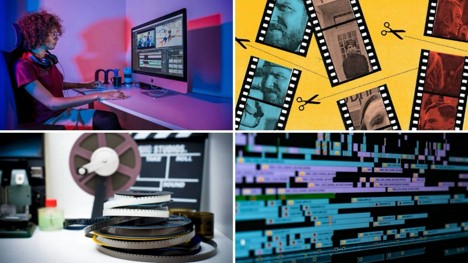
The magic of cinema has always been admired by people through its heroes, unforgettable performances, excellent directing skills, and endings which shock and mesmerize audiences. However, there is one more aspect of a film that deserves respect.
It is the edit.
Herein lies no review of any movie. This is a homage to the invisible form of art which subtly controls everything that we see and feel.
Think of movies like Memento, Fight Club, Old Boy, The Prestige, Churuli, or even the Telugu movie KA. The genius in such movies does not lie in the plot twist alone. It lies in how well information is managed in the film. In essence, storytelling is not only about knowing things but about the timing of knowing them.
That distinction changes everything.
A psychological thriller plays like a game of cat-and-mouse where you search through each shot looking for clues and asking questions to each character. You enjoy yourself in figuring out the story. But in less than a few minutes, the movie changes everything that you think you know.
Not because it lied.
Because it edited.
Modern neuroscience provides a great answer to this. Our brain is essentially a prediction machine that creates the future using pieces of the present. Every cut, every transition, every withholding either validates or disrupts those predictions. The script dictates what information should be available. The editing decides exactly when that information should get to us.
That is where editing stops being a technical process and becomes storytelling itself.
The greatest editors never show their presence They flow through timeliness, points of view, and emotions with such fluidity that it goes unnoticed by the audience. A regular conversation turns into a seed for future reference. An accidental glance assumes significance only when we look back. It is not the narrative which undergoes transformation but our perception of it.
That is why the second watching of a good movie is like watching another movie altogether.
This effect has been explained by film theorists through something called the Kuleshov Effect, which refers to how the meaning of a shot shifts according to its surrounding shots. In addition, psychology adds to this process the concept of reconstructive memory, which means that people tend to edit their past memories based on new information they receive.
Similarly, unfinished questions persist even after completion of a specific scene due to an effect called Zeigarnik Effect. This effect explains how humans remember uncompleted activities better than those that have been completed. In essence, the mind seeks to accomplish that which was left unfinished. And somehow, all of this happens without us noticing.
In psychology, this phenomenon is known as edit blindness: the mind joins up the pieces of footage seamlessly without noticing the very edit points that make that happen. The edit becomes part of the background, leaving only the illusion it creates.
Maybe this is the true victory of the editor: to make us oblivious not only to the artistry but to the process itself.
The next time you watch a movie and get amazed by it, perhaps the best twist was not buried in the plot itself but rather between two cuts.
Because sometimes the best storyteller in movies is not necessarily the writer or the director of the story.
It’s the invisible storyteller that knows exactly how and when to convince you.
Related Blogs

Existentialism: A Guide to Create Your Own Living
Jaskaran Gill PGDM Core Driven by curiosity and an urge to write constantly, He looks…

The Many lives of the Cat in Art History
Janvi PGDM Core Working in introspection, cultural quirks, and observations into writing, and bringing in…

The secret language of communication cues
Padma Poojitha Movva PGDM Core I’m a keen observer with a deep love for learning,…
THE RISE OF CITIZEN JOURNALIM: A THREAT OR A REVOLUTION?
Anisha Kochar PGDM Core Observing quietly, writing deliberately, she looks for meaning in the…
NVIDIA: THE CHIP DOMINANCE
S Hafsah Sayeedah PGDM Core Guided by curiosity and grounded in learning, she…
Are we Addicted to Being Right?
Jaskaran Gill PGDM Core Driven by curiosity and an urge to write constantly, He…