
Integrated Marketing Communication: Definition, Components, Importance and Case Studies for PGDM Students
Home / Academic / Integrated Marketing Communication: Definition, Components, Importance and Case Studies for PGDM Students
A consumer might see a brand on a television advertisement in the morning, receive a discount coupon by email at noon, read a news feature about the company in the afternoon, and watch an influencer review it that night. If each of these messages says something different, the brand feels confused and untrustworthy. If they all reinforce one clear idea, the brand becomes memorable and credible. Managing that consistency is the job of integrated marketing communication.
Integrated marketing communication, usually shortened to IMC, is one of the most examinable and practically useful topics in a PGDM marketing curriculum. This guide explains the concept from first principles, breaks down its components, sets out the planning process, and illustrates each idea with case studies that management students can quote in examinations and interviews.
What Is Integrated Marketing Communication?
Integrated marketing communication is the strategic coordination of all promotional tools and communication channels so that a brand delivers one clear, consistent and compelling message to its audience. Rather than running advertising, public relations, sales promotion and digital marketing as separate activities, IMC unifies them around a single brand idea, so that every touchpoint reinforces the same positioning.
The concept rose to prominence in the early 1990s, when Professor Don Schultz and colleagues at Northwestern University argued that fragmented, siloed promotion was wasteful and confusing. As media multiplied and audiences fragmented, the case for integration became stronger, and IMC is now standard practice.
Why Does Integration Matter? The Communication Process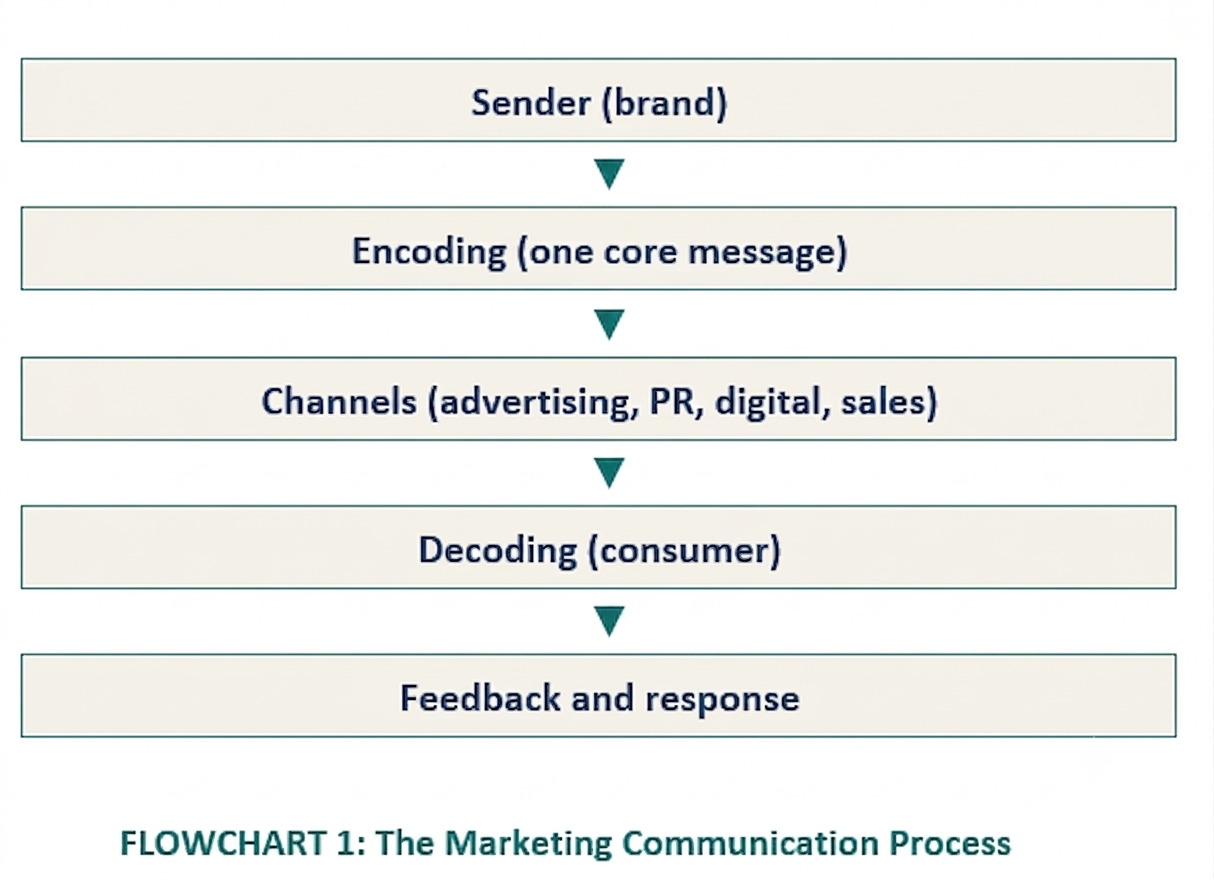
Marketing communication follows a simple process: a sender encodes a message, transmits it through a medium, and a receiver decodes it, with feedback flowing back and noise interfering along the way. When a brand uses many channels without coordination, each channel encodes the message slightly differently, noise increases, and the receiver forms a blurred impression. IMC reduces this noise by ensuring every channel encodes the same core message.
From the 4 Ps to the 4 Cs
IMC also reflects a shift in mindset from the marketer’s four Ps (product, price, place, promotion) to the customer’s four Cs, proposed by Robert Lauterborn: consumer wants and needs, cost to the consumer, convenience, and communication. The final C, communication, replaces one-way promotion with a two-way dialogue, which is exactly what IMC is designed to manage.
What Are the Components of the IMC Mix?
The IMC mix, also called the promotion mix, has six core components. A strong IMC strategy blends these elements so that they support one another rather than compete. Each is defined below with an example.
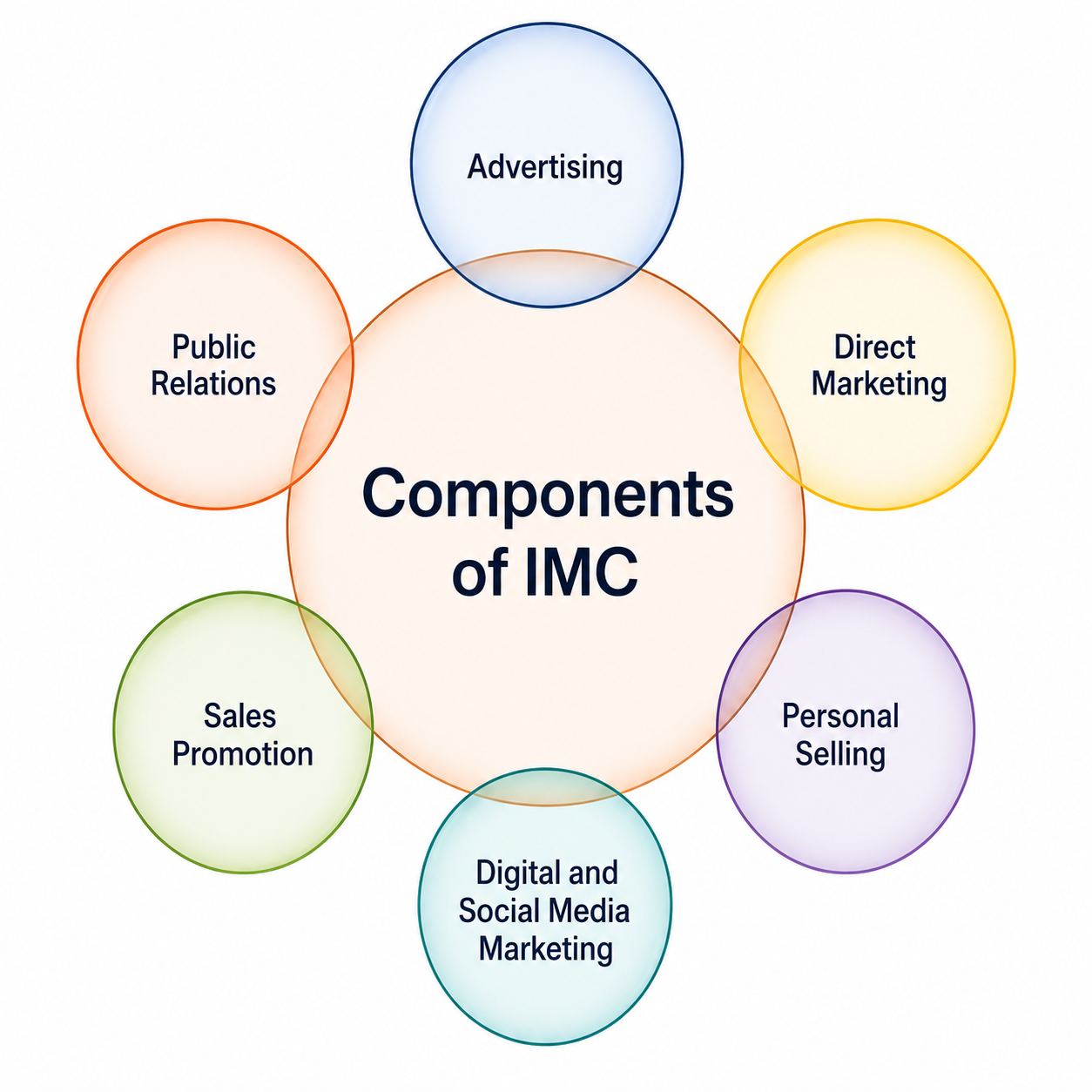
- Advertising: Paid, non-personal communication through mass media such as television, print, radio, outdoor and online. It builds awareness and shapes brand image at scale. Example: a nationwide television campaign for a new smartphone.
- Sales Promotion: Short-term incentives that encourage immediate purchase, such as discounts, coupons, samples, cashback and loyalty points. Example: a festive-season buy-one-get-one offer during Diwali.
- Public Relations and Publicity: Building a favourable brand reputation through earned media, press releases, events, sponsorships and cause associations, often at low direct cost and high credibility. Example: a company sponsoring a national sporting event.
- Personal Selling: Direct, person-to-person interaction between a salesperson and a prospect to inform and persuade. It is powerful for high-value or complex products. Example: a relationship manager advising a client on a home loan.
- Direct Marketing: Communicating directly with targeted individuals to prompt a measurable response, through email, SMS, catalogues and telemarketing. Example: a personalised email offering a subscriber a relevant course.
- Digital and Social Media Marketing: Reaching and engaging consumers through search, social platforms, content, influencers and mobile apps, with precise targeting and two-way interaction. Example: an Instagram campaign with a shoppable link and creator collaboration.
Why Is Integrated Marketing Communication Important?
IMC matters because it turns scattered promotional activity into a coordinated system that is clearer, cheaper and more persuasive. Its main benefits are set out below.
- Message consistency: one voice across every channel strengthens brand identity and reduces consumer confusion.
- Stronger brand recall: repeated, consistent exposure across touchpoints builds memory and recognition.
- Cost efficiency: coordinating channels removes duplication and improves the return on marketing spend.
- Higher engagement and loyalty: a coherent experience builds trust, which encourages repeat purchase and advocacy.
- Greater impact through synergy: channels reinforce each other, so the combined effect exceeds the sum of the parts.
- Competitive advantage: a seamless brand experience is difficult for rivals to imitate and helps a brand stand out.
What Are the Steps in the IMC Planning Process?
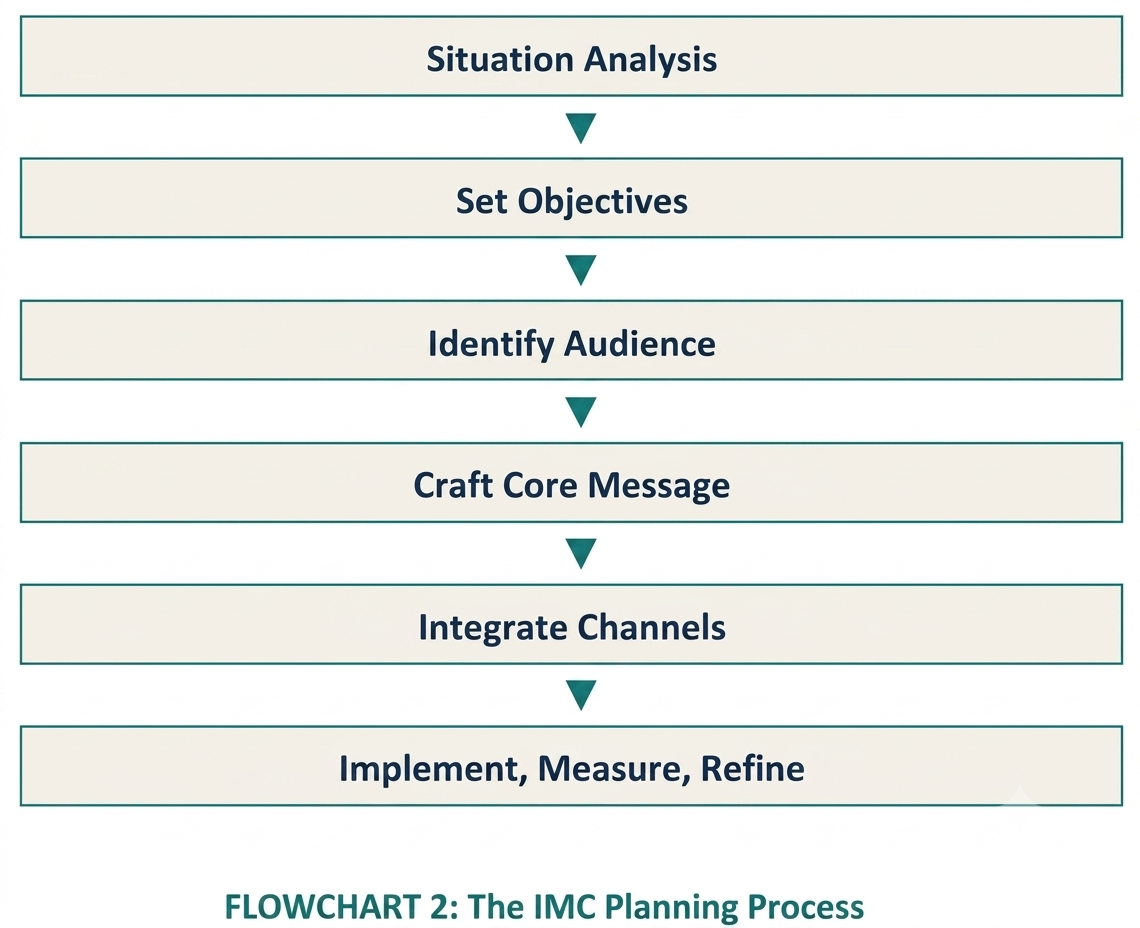
A structured IMC plan moves from understanding the situation to measuring results. The following six steps summarise the process taught in most management programmes.
- Situation analysis: study the market, competitors, audience and the brand’s own strengths and weaknesses.
- Define objectives: set specific, measurable communication goals aligned to business objectives, such as awareness or conversion targets.
- Identify the target audience: define who the message is for using demographic, psychographic and behavioural profiles.
- Craft the core message: develop one clear positioning idea that every channel will carry.
- Select and integrate the channels: choose the right mix of the six components and coordinate their timing and content.
- Implement, measure and refine: run the campaign, track key metrics, and adjust based on results.
What Are Some Real-World IMC Case Studies?
The following four case studies show integrated marketing communication in action. Each notes the core idea, the integration and the takeaway.
1. Cadbury Dairy Milk (India)
The context is what makes this powerful. For decades, chocolate in India was seen as a children’s indulgence, while adults marked celebrations with traditional mithai. Cadbury’s insight was that it could take the emotional role of sweets and attach it to its own brand. The “Kuch Khaas Hai” campaign in the 1990s, remembered for the young woman dancing onto a cricket pitch, first made chocolate feel joyful and adult. Cadbury then built on this with “Kuch Meetha Ho Jaaye”, positioning the bar for the exact moments when a family would normally reach for sweets, and later “Shubh Aarambh”, tying chocolate to the idea of sweetness before an auspicious start such as an exam, a new job or a festival.
The integration is the important part for IMC. That single emotional idea, chocolate as a way to celebrate everyday togetherness, appeared identically across television, festival-edition packaging, in-store promotions during Diwali and Raksha Bandhan, print and, later, digital. No channel drifted from the message. The lesson is that a consistent emotional idea, repeated across every touchpoint over years, can shift how an entire product category is understood.
2. Coca-Cola Share a Coke (Global)
This campaign began in Australia in 2011 and rolled out worldwide, including India. Coca-Cola removed its own famous logo from the front of the bottle and replaced it with hundreds of common first names, and later nicknames and relationships such as “Mom” or “Bestie”. The simple invitation was to find your name, or a friend’s, and share the bottle.
What makes it a model of integration is that the product became the medium. The personalised bottle was the advertisement, and it drove the behaviour the brand wanted: people photographed their named bottles and posted them under the #ShareACoke hashtag, which then fed social media, while television and outdoor advertising carried the same personalised theme. Product, paid media and consumer conversation all told one story. The lesson is that when the product itself, the media around it and the audience are all carrying the same idea, integration multiplies reach far beyond what advertising alone could buy. (Coca-Cola has reported strong sales and engagement results from the campaign; confirm any specific figures against a Coca-Cola or reputable source before quoting them.)
How Is IMC Evolving in the Digital Age?
Digital media has made integration both harder and more important, because there are now many more touchpoints to coordinate. Several shifts define modern IMC.
- Omnichannel consistency: customers move between store, website, app and social feed, and expect a seamless message across all of them.
- Data-driven personalisation: analytics allow the same core message to be tailored to each segment in real time.
- Influencer and content marketing: creators and useful content now carry brand messages with high credibility.
- Two-way engagement: social platforms turn communication into a dialogue, so brands must listen as well as broadcast.
Why Should PGDM Students Study IMC?
For PGDM and MBA students, IMC is a foundational skill that connects strategy, creativity and measurement. It appears directly in careers across brand management, advertising and media planning, digital marketing, public relations and corporate communication, and marketing consulting. A student who can build a coherent, measurable communication plan is prepared for placements and for real campaign work.
A rigorous PGDM programme, such as the marketing specialisation at IMT Hyderabad, develops these skills through live projects, case-based learning and industry engagement, so that students can apply IMC principles in practice.
Frequently Asked Questions
1. What is integrated marketing communication in simple terms?
It is the practice of coordinating all of a brand’s promotional activities, such as advertising, public relations and digital marketing, so they deliver one clear and consistent message everywhere.
2. What are the components of IMC?
The six core components are advertising, sales promotion, public relations and publicity, personal selling, direct marketing, and digital and social media marketing.
3. Who is considered the father of IMC?
Professor Don Schultz of Northwestern University is widely credited with pioneering and popularising integrated marketing communication in the early 1990s.
4. Why is IMC important for a brand?
IMC keeps the brand message consistent, strengthens recall, improves cost efficiency, builds loyalty and creates a competitive advantage through a seamless brand experience.
5. What is the difference between IMC and traditional marketing communication?
Traditional communication often runs channels separately, while IMC coordinates them around a single strategy so that every touchpoint reinforces the same message.
6. What are the steps in the IMC planning process?
Situation analysis, defining objectives, identifying the target audience, crafting the core message, integrating the channels, and implementing, measuring and refining.
7. What are the 4 Cs of IMC?
The 4 Cs are consumer wants and needs, cost to the consumer, convenience, and communication. They reframe the marketer’s 4 Ps from the customer’s point of view.
8. Can you give an Indian example of IMC?
Cadbury Dairy Milk in India ran one emotional idea of celebrating togetherness consistently across television, packaging, retail promotions and digital media, which is a classic example of IMC.
Related Blogs

Supply chain management course: Everything you need to know
A supply chain management course reflects on the end-to-end procedure related to manufacturing, sourcing, planning,…

The Philosophy of Absence: What Does It Mean to Truly Be Alone
Devanshu A B.Com Honours graduate, this boy brings a calm, composed, and optimistic approach…

Ephemeral Teams and Leadership: Leading Teams That Disappear After Projects
Modern work operates through pop-up teams: groups that assemble rapidly, deliver a result, and disband….
Can a PGDM Still Guarantee a Job in the AI Era?
Introduction The dedication to advanced studying and acquiring a higher educational qualification is something that…

India Still The Fastest Growing Economy- Myth or Fact
Introduction The current economic state of India has been on a steady rise since the…
FROM CLASSROOM TO C-SUITE: HOW MODERN MANAGEMENT SHAPES TOMORROW’S LEADERS
Introduction The aspiration to become a businessman is a common dream among many schoolgoers. However,…