Materials Management Course: A Complete Guide to Career Opportunities and Industry Demand
Home / Academic / Materials Management Course: A Complete Guide to Career Opportunities and Industry Demand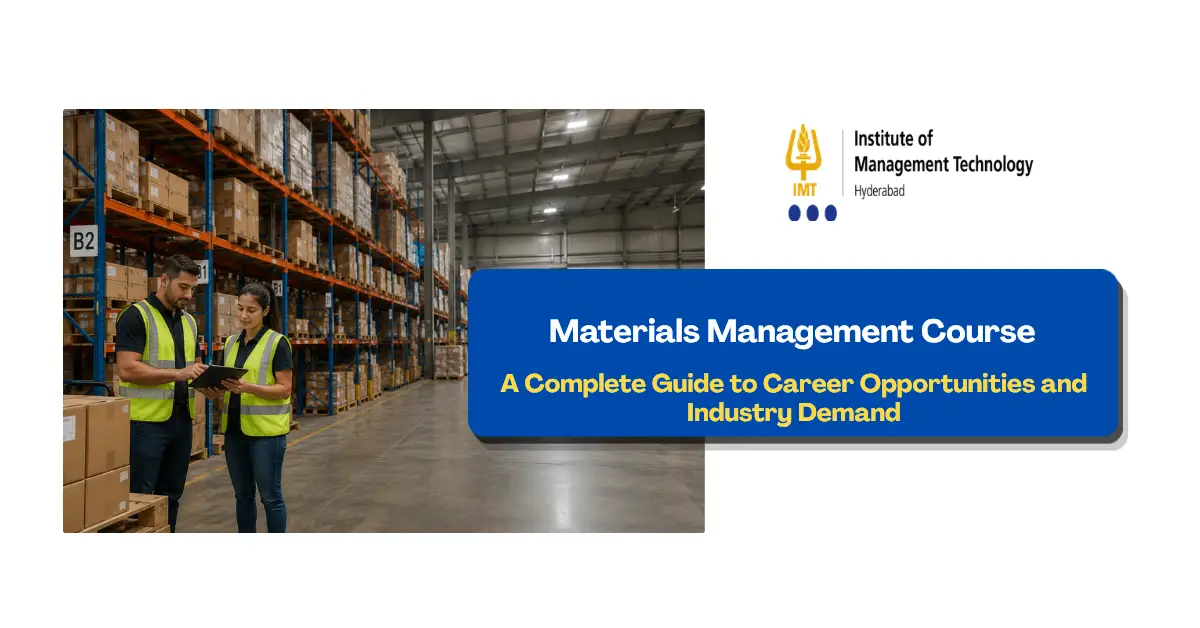
A Materials Management course trains you to handle one of the most valuable functions in any business: making sure the right materials reach the right place, at the right time, at the right cost. Every factory, hospital, e-commerce warehouse and retail chain in India depends on people who can plan purchases, control inventory and keep goods moving. That is exactly what a Materials Management course teaches. In this guide, you will find everything you need before you enrol, including course types, eligibility, syllabus, fees, career opportunities, expected salaries and the industry demand that is driving this field forward.
What Is a Materials Management Course?
A Materials Management course is a professional programme that covers the complete inward flow of materials in an organisation. It focuses on five core areas: procurement, inventory control, warehousing, logistics and vendor management. The aim is simple. Companies lose money when materials arrive late, sit idle in storage or cost more than they should. Trained materials managers prevent these losses.
Most programmes also teach modern tools such as ERP software (SAP and Oracle), barcoding, RFID tracking and demand forecasting. This mix of business knowledge and technical skill is what makes graduates of a Materials Management course useful from day one on the job.
Here is a quick snapshot of the field:
| Aspect | Details |
|---|---|
| Course levels | Certificate, Diploma, Advanced Diploma, PG Diploma, MBA/PGDM specialisation |
| Duration | 6 months to 2 years, depending on the level |
| Mode | Full time, part time, online, distance and weekend batches |
| Core focus | Procurement, inventory, warehousing, logistics, vendor management |
| Common tools taught | SAP, Oracle ERP, Excel, barcoding and RFID systems |
| Typical starting salary | INR 3 to 5 LPA at entry level (indicative) |
Why Is Industry Demand for Materials Management Professionals Rising in India?
The demand is rising because India is spending heavily on logistics and manufacturing, and both sectors run on materials management. The numbers tell a clear story. India’s logistics sector was valued at around USD 215 billion in 2021 and government data projects a compound annual growth rate of 10.7 per cent through 2026. The sector already employs more than 22 million people, and policy programmes such as the National Logistics Policy and PM Gati Shakti are pushing costs down and efficiency up. India’s ranking on the World Bank Logistics Performance Index has also improved to 38th globally.
Three forces are driving hiring in this field:
- E-commerce growth: Quick commerce and online retail need thousands of warehouse, inventory and last-mile professionals. India’s e-commerce logistics market is growing at close to 9 per cent CAGR through 2031.
- Manufacturing expansion: Production Linked Incentive (PLI) schemes in electronics, pharma and automotive have increased procurement and stores roles across the country.
- Technology adoption: Companies now want professionals who can run ERP systems, read data and manage automated warehouses, which is precisely what a modern Materials Management course prepares you for.
Put simply, businesses cannot grow if their materials function is weak. That is why trained candidates are being hired across metros and Tier 2 cities alike.
What Are the Types of Materials Management Courses in India?
You can study materials management at almost every stage of your education or career. The right choice depends on your qualification, budget and how quickly you want to start working. The table below compares the main options:
| Course Type | Duration | Eligibility | Best Suited For |
|---|---|---|---|
| Certificate in Materials Management | 3 to 6 months | 10+2 pass | Beginners testing the field |
| Diploma in Materials Management | 6 to 12 months | 10+2 pass | Freshers seeking quick entry into stores and purchase roles |
| Advanced Diploma in Materials Management | 6 to 12 months | 10+2 or graduation | Candidates wanting deeper coverage of ERP and logistics |
| Diploma in Materials and Logistics Management (DMLM) | 1 year (2 semesters) | Graduate or 10+2, preferably with work experience | Working professionals upgrading domain knowledge |
| PG Diploma in Materials Management (PGDMM) | 1 to 2 years | Graduation in any discipline | Graduates targeting managerial roles |
| MBA/PGDM in Materials or Supply Chain Management | 2 years | Graduation; entrance test where applicable | Candidates aiming for leadership positions |
| Distance MBA in Materials Management | 2 years | Graduation in any discipline | Working professionals who cannot attend regular classes |
Fees vary widely by institute and level. Short online diplomas start at a few thousand rupees, institute-led diplomas such as the DMLM cost around INR 30,000, and full MBA/PGDM programmes cost considerably more.
What Is the Eligibility for a Materials Management Course?
Eligibility is straightforward at every level, which is one reason this field attracts students from arts, commerce and science backgrounds alike.
- Certificate and diploma level: Completion of 10+2 (higher secondary) or an equivalent qualification.
- Advanced and postgraduate diploma level: Graduation in any discipline. Some institutes accept 10+2 candidates with two years of relevant work experience.
- MBA/PGDM level: A bachelor degree with the minimum percentage set by the institute, plus entrance exam scores such as CAT, MAT, XAT or a university-level test where applicable.
There is generally no age limit, and most programmes welcome working professionals from purchase, stores, warehousing and logistics functions who want a formal qualification.
What Subjects Are Covered in the Materials Management Course Syllabus?
The syllabus blends commercial subjects with hands-on technical training. While each institute structures its papers differently, the core modules below appear in almost every Materials Management course syllabus:
| Module | What You Learn |
|---|---|
| Introduction to Materials Management | Objectives, functions and the role of materials in the supply chain |
| Procurement and Purchasing | Sourcing strategies, supplier selection, negotiation and e-procurement |
| Legal Aspects of Procurement | Contracts, compliance and commercial documentation |
| Inventory Management | EOQ, reorder points, ABC analysis and Just-in-Time systems |
| Warehousing and Stores | Warehouse layout, storage systems, barcoding, RFID and automation |
| Logistics and Transportation | Transport modes, cost optimisation and reverse logistics |
| ERP and Information Technology | SAP, Oracle and digital materials management systems |
| Quality Management | TQM, ISO standards and statistical quality control |
| Statistical Methods and Forecasting | Demand forecasting and data-driven planning |
| Cost Control and Waste Management | Lean, Six Sigma, Kaizen and sustainable green practices |
Good programmes add case studies, plant and warehouse visits, group discussions and viva-voce assessments so that learning does not stay on paper.
What Skills Will You Gain from a Materials Management Course?
By the end of the programme, you should be able to manage the full material cycle independently. Employers consistently look for this skill set:
- Procurement and negotiation: Selecting vendors, comparing quotations and closing cost-effective deals.
- Inventory control: Balancing stock levels so that production never stops and capital never sits idle.
ERP proficiency: Working confidently on SAP or Oracle, a skill Indian employers now treat as standard. - Data analysis and forecasting: Using Excel, dashboards and statistical tools to predict demand.
- Warehouse operations: Planning layouts, managing manpower and handling automation.
- Communication and coordination: Working across purchase, production, finance and sales teams every single day.
What Career Opportunities Follow a Materials Management Course?
Career options after a Materials Management course span the entire supply chain, from the purchase desk to the boardroom. Freshers usually begin in stores, purchase or warehouse roles and move into planning and managerial positions within a few years. The table below lists the most common designations along with indicative salary ranges in India:
| Job Role | What the Role Involves | Indicative Salary (INR) |
|---|---|---|
| Stores/Purchase Executive | Day-to-day stores records, indenting and order processing | 3 to 5 LPA |
| Inventory Control Analyst | Stock audits, ABC analysis and reorder planning | 3.5 to 6 LPA |
| Procurement Officer | Vendor sourcing, negotiation and purchase orders | 4 to 8 LPA |
| Warehouse Manager | Storage operations, manpower and dispatch management | 5 to 10 LPA |
| Materials Planner/Demand Planner | Forecasting and material requirement planning | 5 to 10 LPA |
| Logistics Coordinator | Transport planning and shipment tracking | 4 to 8 LPA |
| Supply Chain Analyst | Data-driven cost and efficiency analysis | 5 to 12 LPA |
| Procurement/Materials Manager | End-to-end purchase strategy and team leadership | 8 to 15 LPA |
| Supply Chain Manager/Head | Full supply chain ownership across functions | 10 to 25 LPA and above |
Which Industries Hire Materials Management Professionals?
Almost every industry that buys, stores or moves goods hires from this talent pool. The strongest recruiters right now include:
| Industry | Why Demand Is High |
|---|---|
| E-commerce and quick commerce | Rapid warehouse expansion and last-mile delivery growth |
| Manufacturing and automotive | PLI-driven production growth needs procurement and stores teams |
| Pharmaceuticals and healthcare | Cold chain expansion and strict inventory compliance |
| FMCG and retail | High-volume distribution and shelf availability pressure |
| Construction and infrastructure | Large-scale material planning for projects |
| Third-party logistics (3PL) | Contract logistics growing at over 7 per cent CAGR in India |
| Public sector and defence | Structured stores and procurement departments |
Well-known recruiters in this space include Amazon India, Flipkart, Delhivery, Blue Dart, Mahindra Logistics, DHL and Maersk, along with manufacturing majors across automotive, pharma and FMCG.
Materials Management vs Supply Chain Management: What Is the Difference?
Students often confuse the two, so here is the difference in plain terms. Materials management looks inward and supply chain management looks end to end.
| Parameter | Materials Management | Supply Chain Management |
|---|---|---|
| Scope | Inward flow of materials within the organisation | Complete flow from supplier to end customer |
| Core activities | Purchasing, inventory, stores, warehousing | Sourcing, production, distribution, demand planning |
| Primary goal | Right material, right time, right cost | End-to-end efficiency and customer satisfaction |
| Typical roles | Purchase Officer, Stores Manager, Materials Planner | Supply Chain Analyst, SCM Manager, Demand Planner |
| Career path | Often the entry route into supply chain careers | Broader leadership roles across the network |
Read More: Supply chain management course: Everything you need to know
What Is the Future Scope of Materials Management in India?
The future scope is strong and getting stronger. Supply chain management is projected to remain among the most stable occupations in India through 2030, driven by e-commerce, manufacturing exports and digital transformation. Warehousing is turning into a technology business, with robotics, AI-based forecasting and smart inventory systems becoming standard. Sustainability is adding another layer of demand, since companies now need professionals who understand green supply chains and waste reduction.
What does this mean for you? Professionals who combine materials knowledge with digital skills will move up faster than ever. The middle and senior levels of this profession are short of qualified people, and a structured Materials Management course is the most direct way to fill that gap and build a durable career.
Conclusion: Should You Enrol in a Materials Management Course?
If you want a career with clear demand, quick entry and long-term growth, the answer is yes. A Materials Management course gives you skills that every industry needs, from procurement and inventory control to ERP systems and warehouse operations. India’s logistics boom, manufacturing push and e-commerce expansion have created a genuine shortage of trained professionals, and salaries reflect that shortage at every level. Choose a recognised programme, focus on practical and ERP skills during your study, and you will find that the doors this qualification opens stay open for decades. Speak to the admissions team, compare the course levels in this guide and take the first step towards a career that keeps India’s supply chains running.
Frequently Asked Questions
1. What is a Materials Management course?
It is a professional programme covering procurement, inventory control, warehousing, logistics and vendor management. It is available as a certificate, diploma, advanced diploma, PG diploma or MBA specialisation.
2. Who is eligible for a Materials Management course?
Certificate and diploma programmes require 10+2. Postgraduate diplomas and MBA programmes require graduation in any discipline, with entrance scores where applicable.
3. What is the salary after completing this course?
Entry-level roles typically pay INR 3 to 5 LPA, mid-level roles pay INR 5 to 12 LPA, and senior roles can cross INR 25 LPA. Actual figures depend on the industry, city and your ERP proficiency.
4. Can I study Materials Management online or through distance learning?
Yes. Several institutes offer weekend online batches and distance MBA formats designed for working professionals.
5. Is Materials Management a good career in India?
Yes. India’s logistics sector employs more than 22 million people and is growing at over 10 per cent annually, so trained professionals are in steady demand.
6. Which industries hire after a Materials Management course?
E-commerce, manufacturing, automotive, pharmaceuticals, FMCG, construction, retail and third-party logistics companies are the biggest recruiters.
Related Blogs

Information Fatigue: The age of the Infinite Scroll
Kashish Sehgal PGDM Marketing A quiet observer, she is drawn to the stories behind…
Retail Management Courses After Graduation: Which One Is Right for You in 2026?
If you have just finished your degree and you feel drawn to the energy of…
Customer Relationship Management: Meaning, Types, Benefits, Strategies & How It Works (A PGDM Guide)
Customer Relationship Management (CRM) is the practice of collecting, organising and using customer data so…
Top Career Paths After PGDM in Logistics & Supply Chain Management for a Successful Future in 2026
Think about the last time you ordered something online and it arrived the next morning….
PGDM vs MBA: Which One Is the Best for You?
A PGDM (Post Graduate Diploma in Management) is a diploma awarded by an autonomous, AICTE-approved…
Course in Retail Management: Eligibility, Fees, Career Scope & Retail Management Courses After 12th (2026)
A course in retail management trains you to run retail businesses, covering store operations, merchandising,…