
Why Did Silicon Valley Bank Collapse? A Case Study of How Liquidity Risk Became a Financial Crisis
Home / Case Study / Why Did Silicon Valley Bank Collapse? A Case Study of How Liquidity Risk Became a Financial Crisis
The Silicon Valley Bank collapse came on 10 March 2023 because SVB had parked most of its deposits in long-term bonds that lost value when US interest rates rose. When it sold some of those bonds at a $1.8 billion loss, its mostly uninsured startup depositors panicked and pulled out more than $40 billion in a single day. The bank simply ran out of cash.
On a Wednesday evening in March 2023, Silicon Valley Bank looked like a well-run, well-capitalised lender. By Friday morning it was gone. No fraud, no bad loans. Just a bank that bet on low interest rates, and customers who could move money faster than it could find cash.
That is what makes the Silicon Valley Bank collapse such a useful case study. It shows how liquidity risk, something that sounds dull on a syllabus, can sink a profitable bank in about 48 hours, and what that means for Indian banks and finance students.
- SVB tripled its deposits in 2019–2021 and put much of the money into long-dated bonds.
- Sharp US rate hikes in 2022 left roughly $15 billion in unrealised bond losses, the root of the Silicon Valley Bank collapse.
- About 94% of SVB’s deposits were uninsured, so customers had every reason to run.
What Was Silicon Valley Bank?
Founded in 1983 and based in Santa Clara, California, SVB was the go-to bank for the startup world. It served nearly half of all venture-backed technology and life sciences companies in the United States, and by the end of 2022 it was the 16th largest bank in the country, with around $209 billion in assets (Federal Reserve, 2023).
How SVB Grew So Fast, and Where the Money Went
The pandemic years were a funding boom for tech, with near-zero rates and venture rounds everywhere. Much of that cash landed at SVB. Between 2019 and 2021, the bank roughly tripled in size.
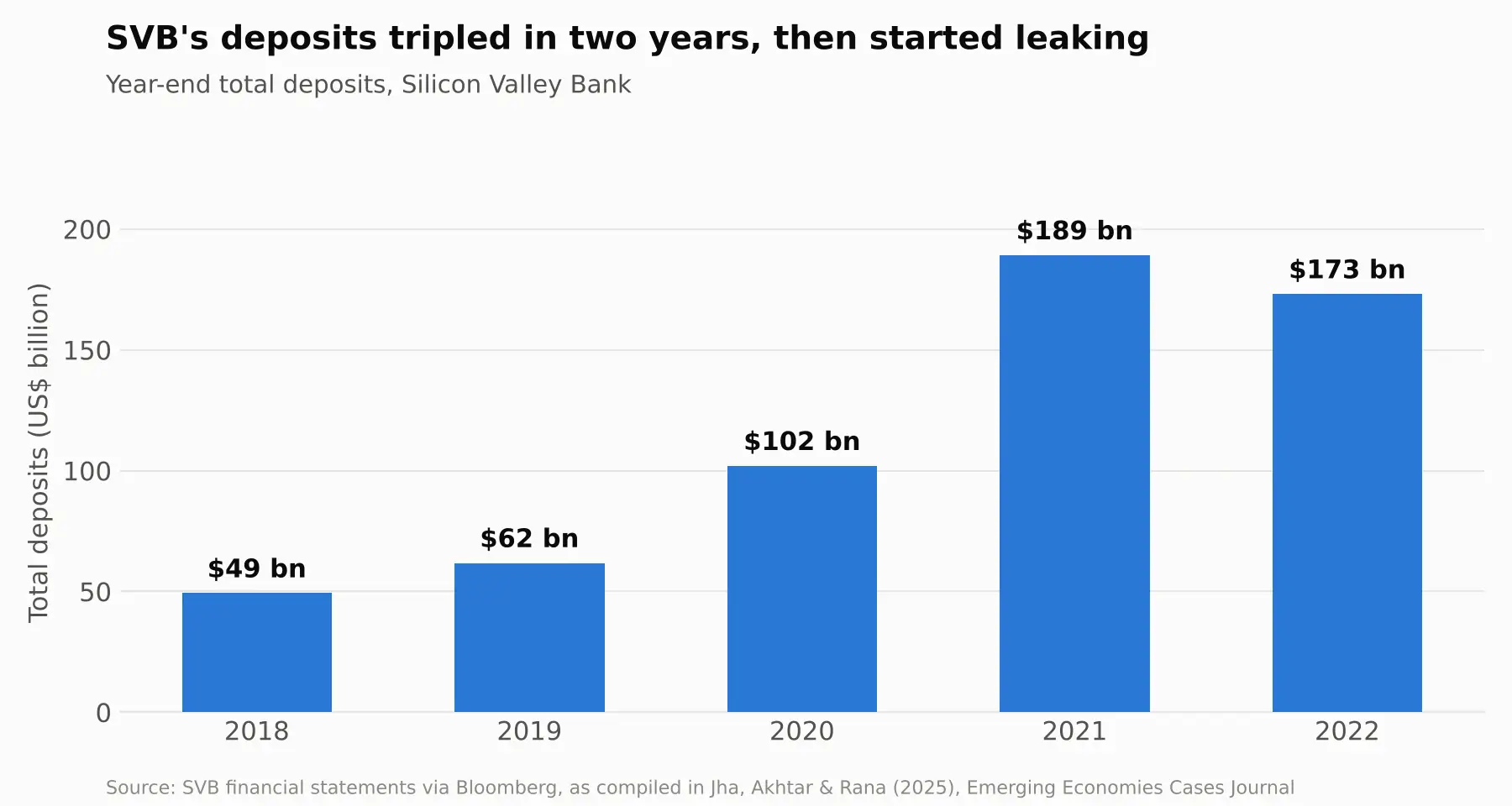
Figure 1: The deposit boom that set up the Silicon Valley Bank collapse
Here is the catch. Startups did not need many loans, so SVB could not lend out all that money. By the end of 2022, loans made up only 35% of its assets, against 58% for comparable large US banks. The rest went into securities, mostly US Treasuries and agency mortgage-backed bonds with maturities of 10 years or more. The held-to-maturity portfolio alone had an average duration of 6.2 years.
Why Did Silicon Valley Bank Collapse? The Four Root Causes
1. Interest rate risk: the bonds lost value
To fight inflation, the Fed lifted its policy rate from near zero in early 2022 to 4.5–4.75% by February 2023. When rates rise, the market price of older, low-coupon bonds falls. Nobody pays full price for a 1.5% bond when new ones pay 4.5%, as this example shows.
| Scenario | Bond held | Market rate | Approx. market value |
|---|---|---|---|
| When bought | ₹100, 10-year, 1.5% coupon | 1.5% | ₹100 |
| After rate hikes | Same bond | 4.5% | about ₹76 (a 24% drop) |
Scale that up and SVB was sitting on roughly $15 billion in unrealised losses on its held-to-maturity bonds by end-2022, close to its entire equity of around $16 billion. Worse, the Fed found SVB had removed interest rate hedges as rates rose. This is where the Silicon Valley Bank collapse really began.
2. Concentrated, uninsured deposits
In the US, deposit insurance covers up to $250,000 per depositor per bank. SVB’s customers were companies holding payroll and runway money, often in the millions. As a result, about 94% of its deposits were uninsured, compared with 41% at peer banks.
Depositors were also tightly networked through the same VC investors and group chats. When one investor told founders to move money, hundreds acted within hours. That speed is the defining feature of the Silicon Valley Bank collapse.
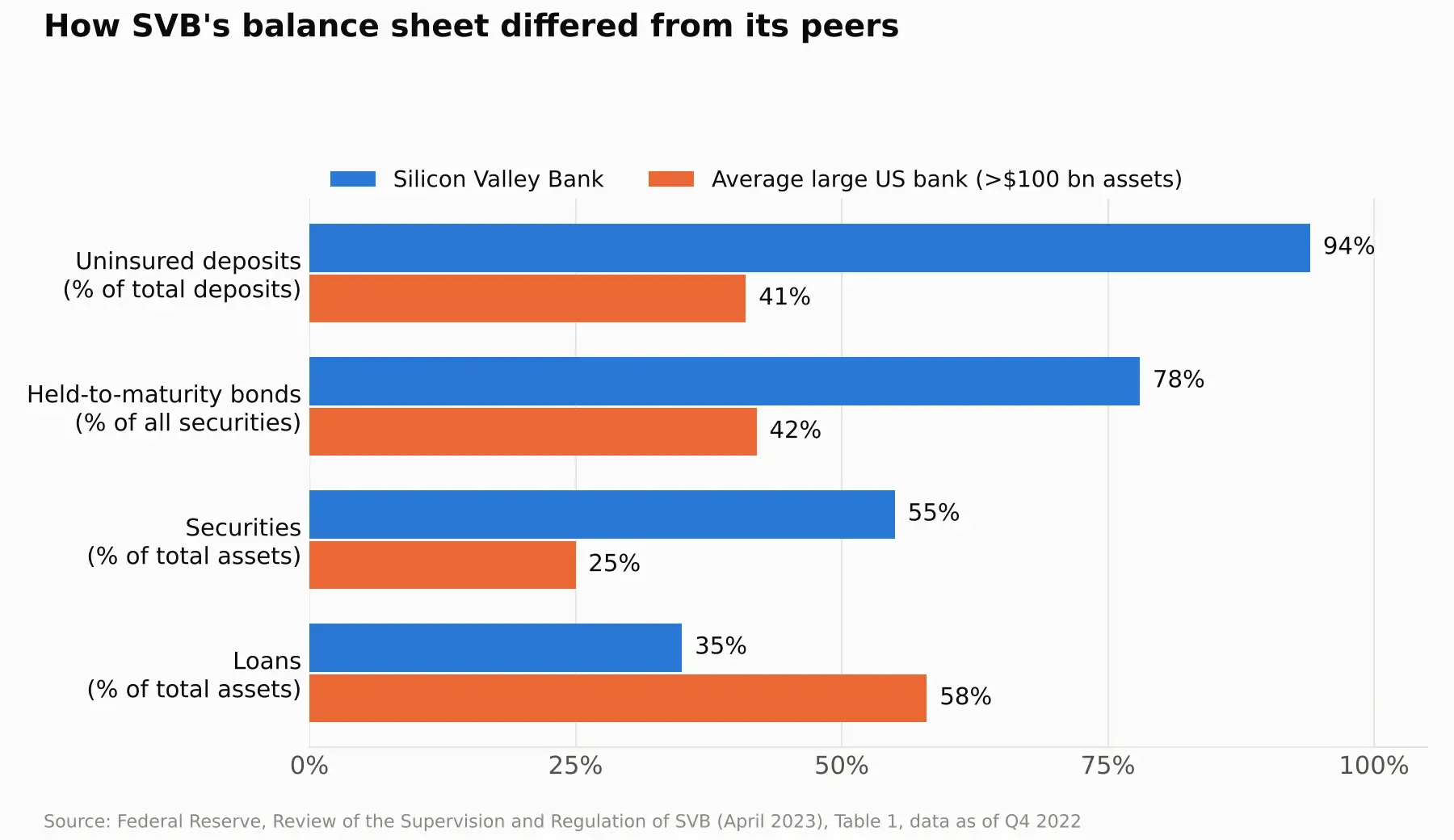
Figure 2: SVB was an outlier on almost every risk measure
3. Asset-liability mismatch: liquidity risk
This is the core of the story. SVB’s deposits could leave on demand, but its long-term bonds could only become cash if sold at a loss. Banks usually manage this asset-liability mismatch with a buffer of cash and short-term assets. SVB’s buffer was thin.
There was also an accounting trap. Bonds classified as held to maturity (HTM) are carried at cost, so their losses do not hit reported capital. But if a bank sells a meaningful part of that book, the whole portfolio may have to be marked to market. That made the HTM pile effectively frozen just when SVB needed cash.
4. Weak risk management and light-touch supervision
SVB went without a chief risk officer for much of 2022, the very year rates jumped. US rule changes in 2018 and 2019 had also exempted banks under $250 billion from the toughest liquidity and stress-testing requirements. SVB’s liquidity coverage ratio was reportedly around 75% at end-2022, below the 100% bigger banks must meet (Yale SOM).
The Fed’s own review of the Silicon Valley Bank collapse admitted supervisors were slow to see these weaknesses and did not push hard enough once they did (Fed review PDF).
Silicon Valley Bank Collapse Timeline: 48 Hours That Shook Banking
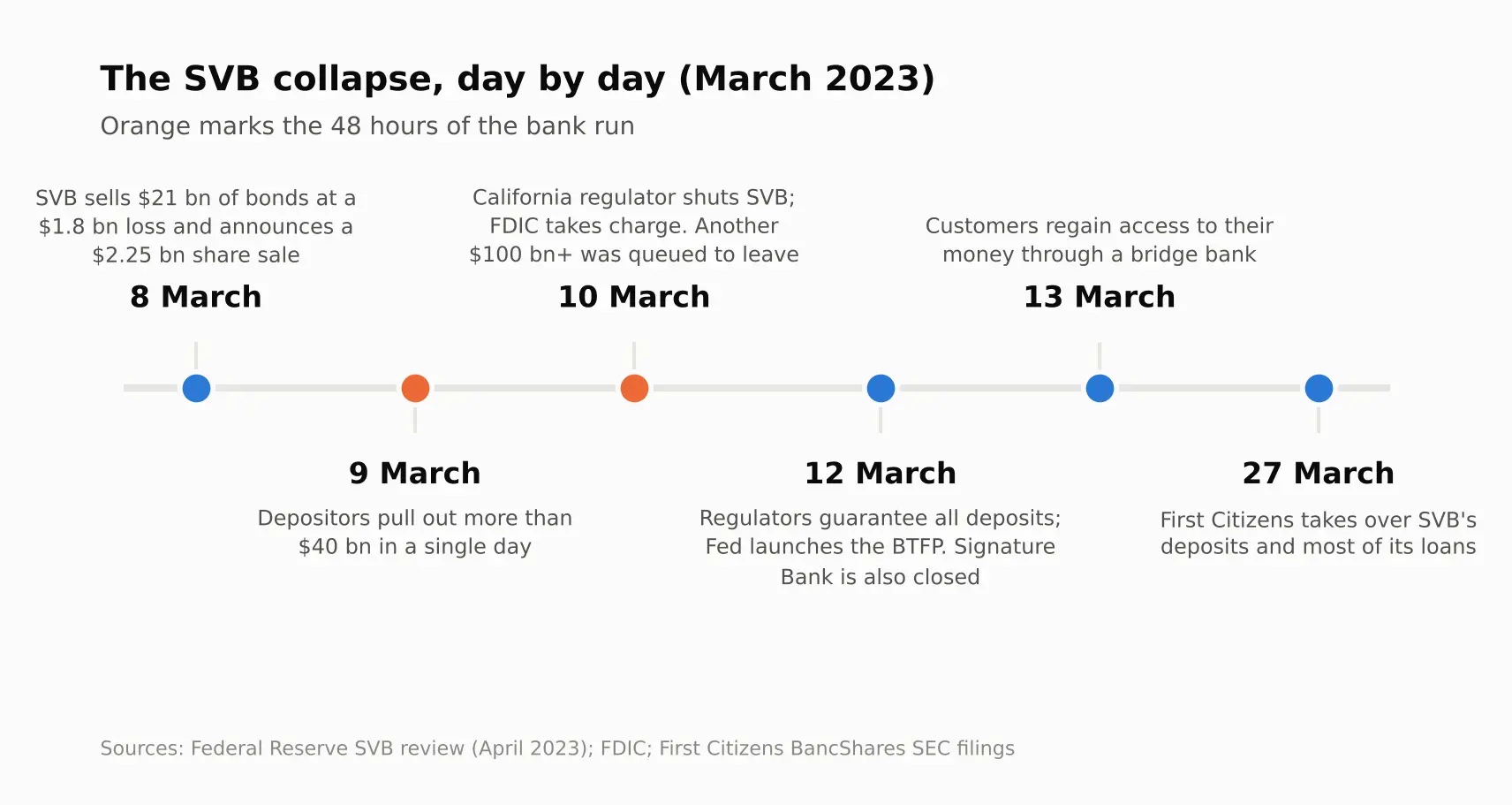 Figure 3: The collapse of Silicon Valley Bank, day by day
| Date (2023) | What happened | Why it mattered |
|---|---|---|
| 8 March | SVB sold $21 bn of bonds at a $1.8 bn after-tax loss and announced a $2.25 bn share sale | Investors read it as a sign the bank was short of capital |
| 9 March | Depositors withdrew over $40 bn; the share price fell about 60% | One of the fastest bank runs on record |
| 10 March | California regulator closed SVB and named the FDIC receiver | Over $100 bn more was queued to leave that day |
| 12 March | All deposits guaranteed; Fed launched the Bank Term Funding Program; Signature Bank closed | Contagion contained |
| 27 March | First Citizens Bank took over SVB’s deposits and about $72 bn of loans | Customers moved to a stable new owner |
How Liquidity Risk Turned Into a Solvency Crisis
On paper, SVB was solvent, with a common equity tier 1 ratio of 12% against a 10% average for large peers. But that figure ignored the hidden bond losses. Once depositors left, SVB had to sell, the losses became real and the capital vanished. That is the central lesson of the Silicon Valley Bank collapse: a liquidity problem (not enough cash today) became a solvency problem (not enough assets to cover liabilities).
| Risk type | What it means | How it showed up at SVB |
|---|---|---|
| Interest rate risk | Asset values fall when rates rise | Around $15 bn of unrealised bond losses |
| Liquidity risk | Cannot meet withdrawals without selling assets at a loss | Over $40 bn withdrawn in a single day |
| Concentration risk | Too many similar customers | Tech and VC-backed firms dominated deposits |
| Solvency risk | Liabilities exceed assets | Losses crystallised once bonds had to be sold |
How US Regulators Responded to the Silicon Valley Bank Collapse
Over the weekend of 11–12 March, the US Treasury, the Fed and the FDIC invoked a “systemic risk exception” and protected all SVB and Signature Bank depositors, including uninsured ones (joint statement). Shareholders and bondholders were not protected.
The Fed also launched the Bank Term Funding Program (BTFP), lending to banks for up to a year against the face value of their government bonds, so no one had to dump bonds at a loss. The FDIC initially estimated a $20 billion cost to its insurance fund, recovered through a special levy on banks rather than from taxpayers.
Lessons from the Silicon Valley Bank Collapse for Indian Banks
India has had its own banking scares, from PMC Bank to Yes Bank. But Yes Bank’s trouble came from bad loans. The Silicon Valley Bank collapse happened while SVB held some of the safest bonds in the world. Here is what Indian readers should take away:
- Safe is not the same as liquid: Indian banks hold large government securities portfolios to meet SLR requirements. Watching how those holdings respond to rate cycles matters as much as watching NPAs.
- Deposit insurance limits shape behaviour: In India, DICGC insures up to ₹5 lakh per depositor per bank. Businesses keeping large balances in one bank carry the same uninsured exposure SVB’s clients did.
- Size-based relaxation can backfire: RBI applies Basel III liquidity norms such as the LCR broadly across scheduled commercial banks, a contrast to the US rollback that let SVB slip through.
- Startups need treasury discipline: Several Indian startups with US entities had money stuck at SVB that weekend. Spreading cash across banks is basic risk management, not paranoia.
What PGDM Finance Students Should Take From This Case
For finance students, the Silicon Valley Bank collapse ties together topics that usually sit in separate classes: bond valuation, duration, asset-liability management and bank regulation. It is the kind of case that subjects like Risk Management in Banks and Fixed Income Securities in the PGDM in Finance at IMT Hyderabad are built around.
Try these questions in your next case discussion:
- If you were SVB’s CFO in mid-2022, would you have sold bonds early, raised capital, or added hedges? What would each have cost?
- Was the Silicon Valley Bank collapse mainly a management failure, a regulatory failure, or a depositor panic?
- Could an Indian bank face a similar run in the age of UPI and instant transfers?
Read More: Pepsi vs Coca-Cola case study | Apple comeback case study
Conclusion
The Silicon Valley Bank collapse was not about reckless lending. It was about a mismatch between money that could leave in minutes and assets that took years to mature, made worse by rising rates, a concentrated client base and weak risk controls. The lesson is old, but SVB proved how fast it can play out in a digital world.
To learn to spot risks like these early, explore the PGDM in Finance at IMT Hyderabad and check admissions for the next batch.
Frequently Asked Questions
When did Silicon Valley Bank collapse?
SVB was closed by the California Department of Financial Protection and Innovation on 10 March 2023, and the FDIC was appointed receiver. At the time it was the second-largest bank failure in US history.
Why did Silicon Valley Bank fail?
The Silicon Valley Bank collapse happened because rising interest rates cut the value of its long-term bond holdings, and its mostly uninsured depositors withdrew money in a rapid bank run after it announced a $1.8 billion loss on bond sales.
Did SVB depositors lose their money?
No. US regulators used a systemic risk exception to protect all deposits, insured and uninsured. Shareholders and bondholders of SVB Financial Group were not protected.
What is liquidity risk in banking?
Liquidity risk is the risk that a bank cannot meet withdrawals or payments on time without selling assets at a loss. At SVB, deposits could leave instantly while its assets were locked in long-term bonds.
Can a bank run like SVB’s happen in India?
The risk exists anywhere deposits can move instantly, but Indian banks face broader liquidity rules and a less concentrated deposit base. Large uninsured balances in a single bank remain a risk worth managing.
SOURCES
- Federal Reserve: Review of the Supervision and Regulation of Silicon Valley Bank (April 2023)
- Joint statement by Treasury, Federal Reserve and FDIC, 12 March 2023
- FDIC: Failed bank information, Silicon Valley Bank
- US GAO: Preliminary review of agency actions related to March 2023 bank failures
- Jha, Akhtar & Rana (2025), The Swift Rise and Sudden Fall, Emerging Economies Cases Journal
Related Blogs

Pepsi Vs Coca-Cola: The Cola Wars and What They Teach Future Business Leaders
Summary The rivalry between Pepsi and Coca-Cola, widely known as the Cola Wars, is one…

How Titan Became One of the World’s Largest Watch Manufacturers
Summary This case study examines how Titan, a joint venture between the Tata Group and…

UPI Case Study: How India Built the World’s Largest Real-Time Payment Network
How did a payment system built in India go on to process nearly half of…

How Reliance Jio Revolutionized India’s Telecom Industry: Strategic Lessons for PGDM Students
Summary This case study examines how Reliance Jio transformed India’s telecommunications industry within a few…

Zepto vs Blinkit vs Instamart: A Strategic PGDM Case Study of India’s Quick Commerce Revolution
Why is India’s quick commerce revolution worth studying? Quick commerce is the fastest-adopted retail format…

The Apple Comeback Under Tim Cook: A Business Case Study for PGDM Courses and Future Managers
Summary When Tim Cook became chief executive of Apple in 2011, many people doubted that…